
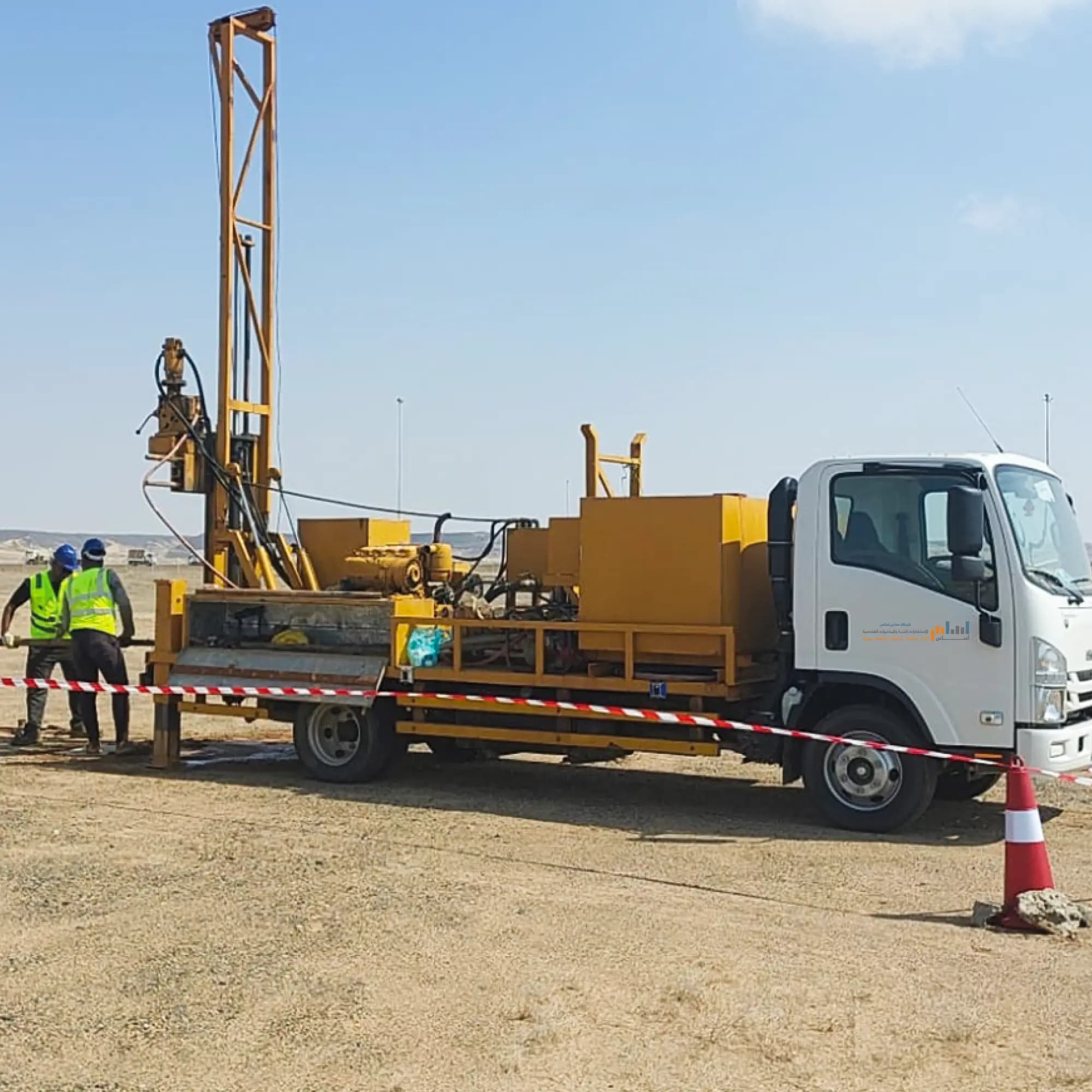
You can change the finishes after handover, and you can even revise the design mid-construction — but you can never change the soil your project stands on. That is why the geotechnical study is the one decision that tolerates no postponement and no guesswork: it tells the designer which foundation to choose, tells the contractor what to expect during excavation, and tells the owner their investment stands on understood ground.
A Working Definition
A geotechnical investigation is an integrated program of field and laboratory work that draws an accurate picture of what sits below the surface: the layer sequence, each layer's properties, the groundwater level, and the available bearing capacity — then translates all of it into signed design recommendations in a certified report.
Its usual components:
- Soil borings drilled to depths matched to the structure
- Standard Penetration Tests (SPT) inside each borehole
- Laboratory tests on samples (density, moisture, plasticity, shear)
- Groundwater level observation and its implications
- Calculation of allowable bearing capacity
- A certified geotechnical report with foundation recommendations
Four Reasons It Cannot Be Skipped
- Choosing the right foundation: isolated footings, a raft, or piles? There is no answer without soil data.
- Catching risks early: differential settlement, weak layers, voids — discovered by the borehole, not by the crack.
- Project economics: the study's cost is marginal next to remediating failed foundations after construction.
- Regulatory requirements: the permit itself hinges on a certified soil report with most authorities.
From Site to Report: the Journey
1) Reconnaissance: a field visit to assess the terrain and lay out boreholes according to the project's footprint and structural system.
2) Drilling and borings: specialized rigs reach the required depths while crews collect representative samples, run SPTs, log the stratigraphy, and record groundwater.
3) The laboratory: samples are analyzed for density, moisture, Atterberg limits, shear strength, and bearing capacity.
4) The geotechnical report: layer descriptions, complete test results, engineering recommendations, and the most suitable foundation system — signed and certified.
When Should You Order a Soil Study?
- Before any new construction project — residential, commercial, or industrial
- Before adding floors to an existing building
- When cracks or early signs of settlement appear
- Before roads and infrastructure networks
- When buying land that has never been investigated
SBC 303 Does Not Negotiate
Saudi Building Code SBC 303 (Soils and Foundations) mandates a certified geotechnical investigation before execution. Skipping it carries a price: permit rejection by the municipality, loss of latent-defect insurance coverage at the first settlement or crack, and full legal liability on the contractor toward the owner.
Beware the "Ghost Report"
A ghost report is paperwork written without real borings or tests, produced only to tick the licensing box. Its dangers:
- It bears no relation to the site's actual soil — any design built on it is designed blind
- Latent-defect insurers (such as Malath) reject it
- It collapses under the first supervisory audit
- It drags the contractor and engineering office into legal liability
At TECHNO Soil Lab, every borehole is documented with site photographs and every result is recorded on a verifiable, calibrated instrument.
What TECHNO Soil Lab Brings
- Modern rigs and periodically calibrated instruments
- Geotechnical engineers experienced across the Kingdom's varied terrain
- Certified reports accepted by municipalities and supervisory bodies
- Turnaround that respects project schedules
- Technical support after report delivery
Bottom Line
The geotechnical study is not a routine item in the permit file — it is the data on which everything above ground is built. Pay for knowledge today, or pay a multiple of it for ignorance tomorrow.