Field Tests and Boreholes
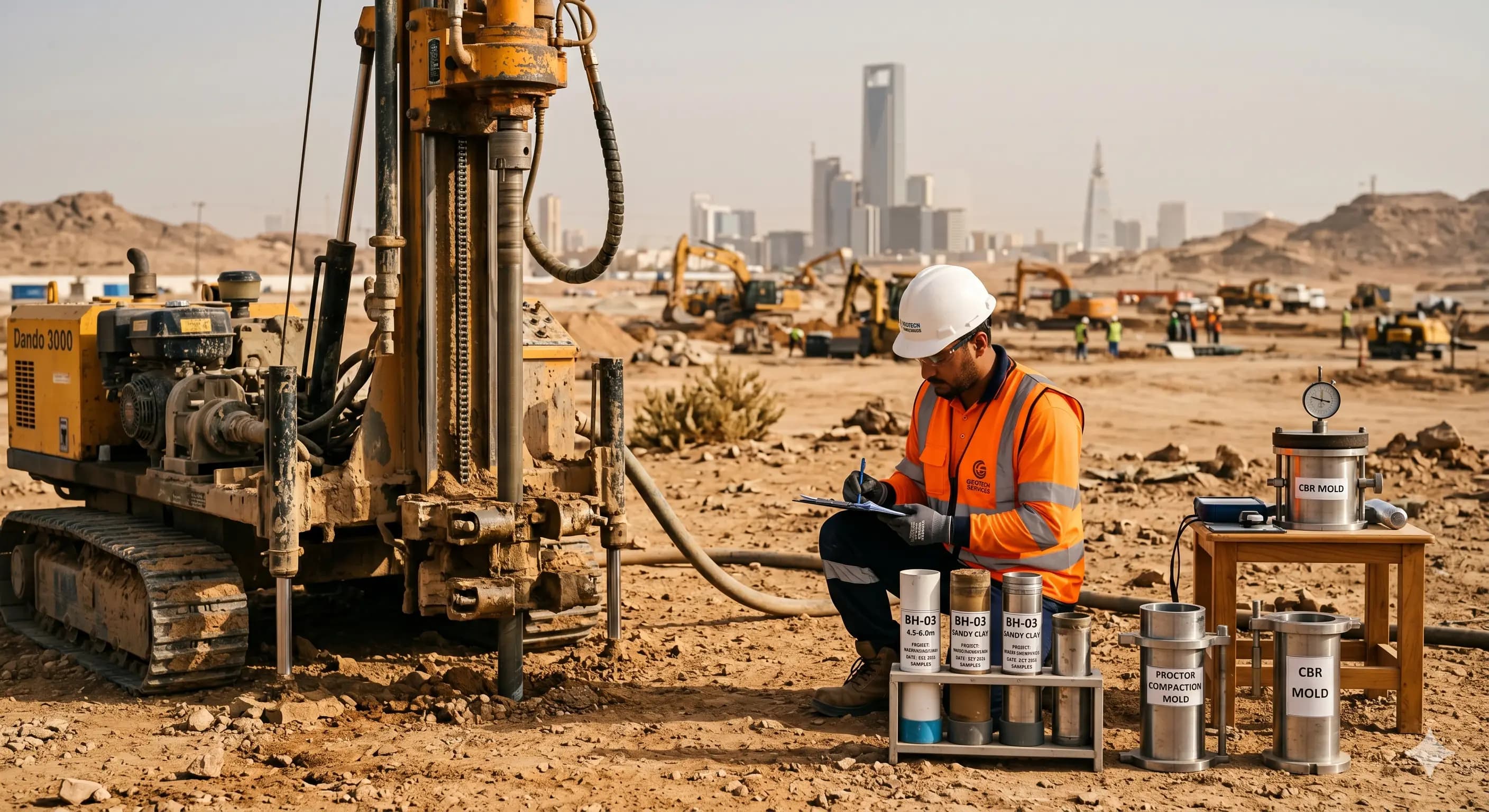
These record in-place conditions and changes with depth before samples move to the laboratory.
A soil testing laboratory covering pre-construction boreholes, in-situ testing, sampling, laboratory analysis, and geotechnical reporting according to each project's scope.

In Short
A soil testing laboratory investigates the ground before foundation design through boreholes, field measurements, and laboratory analysis. The work starts with a site-specific investigation plan and sampling, then documents the soil profile, test results, and geotechnical recommendations the structural designer needs for the project.
Before a single cubic meter of concrete is poured, you need to know exactly what you're building on: solid rock, loose uncompacted fill, or collapsible soil that settles when saturated. Soil testing answers that question directly — by drilling boreholes to a depth matched to the building's size, sampling every layer, and running lab analysis to establish safe bearing capacity and groundwater level.
The geotechnical report turns subsurface conditions into usable design information instead of general assumptions. TECHNO Soil Lab coordinates the work from its Ash Shara'i, Makkah head office, with field teams mobilizing to projects in Jeddah, Madinah, Riyadh, and Qassim according to project scope and scheduling.
Soil investigation is not one test. The engineer selects a program that combines site observations with sample results for the structure type and project stage.
These record in-place conditions and changes with depth before samples move to the laboratory.
The soil laboratory classifies samples and measures their engineering behavior under the selected program.
Every borehole and lab test at TECHNO Soil Lab follows a specific international standard — not an ad-hoc procedure.
Saudi Building Code — sets minimum borehole count and depth by project size and type (§18)
Standard Penetration Test (SPT) for soil density/consistency at depth
Grain-size analysis to classify soil type (sand, clay, silt)
Atterberg limits — liquid and plastic limit for cohesive soils
Modified Proctor for maximum dry density and optimum moisture in fill
California Bearing Ratio (CBR) for pavement and road layer design
Five connected stages, with the scope of each tailored to the site and project.
1. Site Visit & Borehole Count
Our team surveys the site and determines the required number of boreholes based on plot area and planned building type (residential, commercial, tower), per SBC 303 §18.
2. Drilling & Sampling
Boreholes are drilled to the specified depth with SPT roughly every 1.5 m, and disturbed/undisturbed samples taken from each distinct layer.
3. Lab Analysis
Samples move to our Makkah lab for grain-size, Atterberg limits, Proctor, and CBR analysis as the project requires.
4. Bearing Capacity Calculation
The geotechnical engineer analyzes SPT data and lab results to calculate safe bearing capacity and recommend a foundation type (isolated, raft, or piles).
5. Report Issuance
The site description, borehole logs, test results, calculations, and recommendations are compiled in one report. The delivery schedule is stated in the quotation after the borehole count, depths, and test program are reviewed.
When comparing soil testing laboratories in Saudi Arabia, review the borehole, testing, and reporting scope before comparing price or turnaround.
Send the information you have so the team can define a preliminary scope instead of giving a generic price that may not fit your site.
16 field and laboratory tests available by project scope
Standard soil sampling from site
أخذ عينة من الردميات بالطريقة القياسية
Unit: sample
Sieve Analysis
التدرج الحبيبي
Unit: sample
Fines passing #200 sieve (0.075 μm)
المواد الناعمة المارة من منخل #200
Unit: sample
Atterberg Limits (LL & PL)
حدود أتربرج (السيولة واللدونة)
Unit: sample
Modified Proctor
البروكتور المعدل
Unit: sample
California Bearing Ratio — CBR (3 molds)
نسبة التحمل كاليفورنيا (3 قوالب)
Unit: sample
Field Density — Sand Cone (min 5 pts/visit)
الكثافة الحقلية بالمخروط الرملي (5 نقاط/زيارة)
Unit: point
Field Density — Nuclear Method (5 pts/visit)
الكثافة الحقلية بالطريقة النووية (5 نقاط/زيارة)
Unit: point
Thermal Conductivity
التوصيلية الحرارية للتربة
Unit: test
Thermal Resistivity
المقاومة الحرارية للتربة
Unit: test
Los Angeles Abrasion
مقاومة التآكل — لوس أنجلوس
Unit: sample
Hydrometer Analysis
الهيدرومتر للمواد الطينية
Unit: sample
Moisture Content %
محتوى الماء
Unit: sample
Relative Density (sandy soil)
الكثافة النسبية للتربة الرملية
Unit: test
Plate Load Test (P.L.T)
قرص التحميل
Unit: test
Slab Load Test
تحميل السقف
Unit: test
Field and laboratory tests selected to match the project scope
Accumulated technical experience in testing & engineering consultancy
From our Makkah head office, via equipped field teams
A submission-ready report — not scattered numbers.
Each guide answers a separate search intent while this service page remains focused on requesting the work.
Understand how borehole count, depth, and tests affect quotations.
Read the guideA practical comparison of SPT, CBR, plate load, and field density.
Read the guideReview report contents and documents the relevant authority may request.
Read the guideA simple guide from site access through interpreting the results.
Read the guideA checklist for scope, licensing, and deliverables before signing.
Read the guidePer SBC 303, a geotechnical investigation must include: exploratory borings, Standard Penetration Test SPT (ASTM D1586), grain size analysis (ASTM D422), and Atterberg limits (ASTM D4318). High-rise buildings and critical facilities require additional tests such as CBR and Plate Load.
Explore the rest of our accredited engineering tests in one place

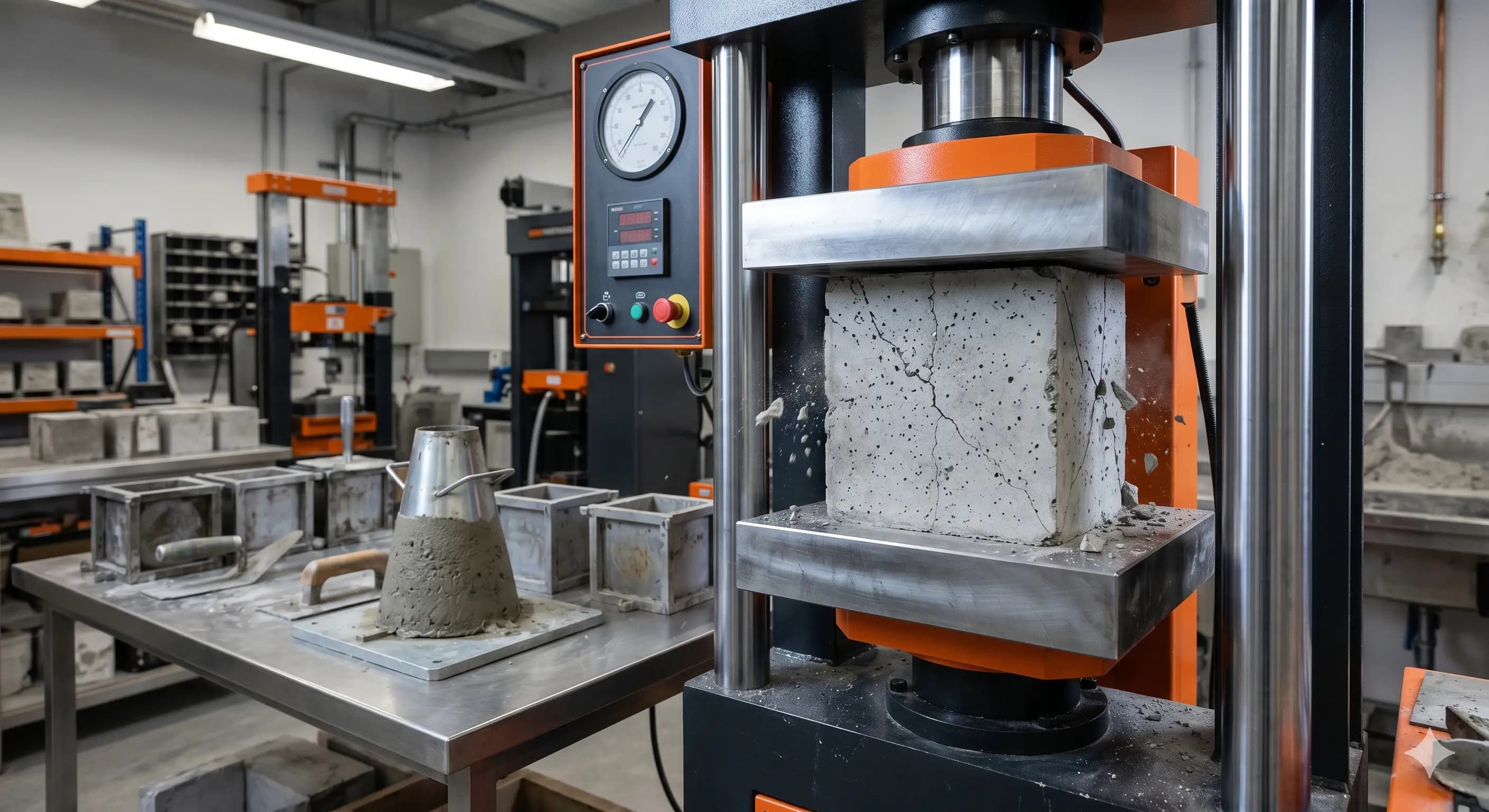
Concrete
Fresh and hardened concrete testing covering slump, temperature, specimens, compressive strength, concrete cores, and non-destructive methods to project specifications.

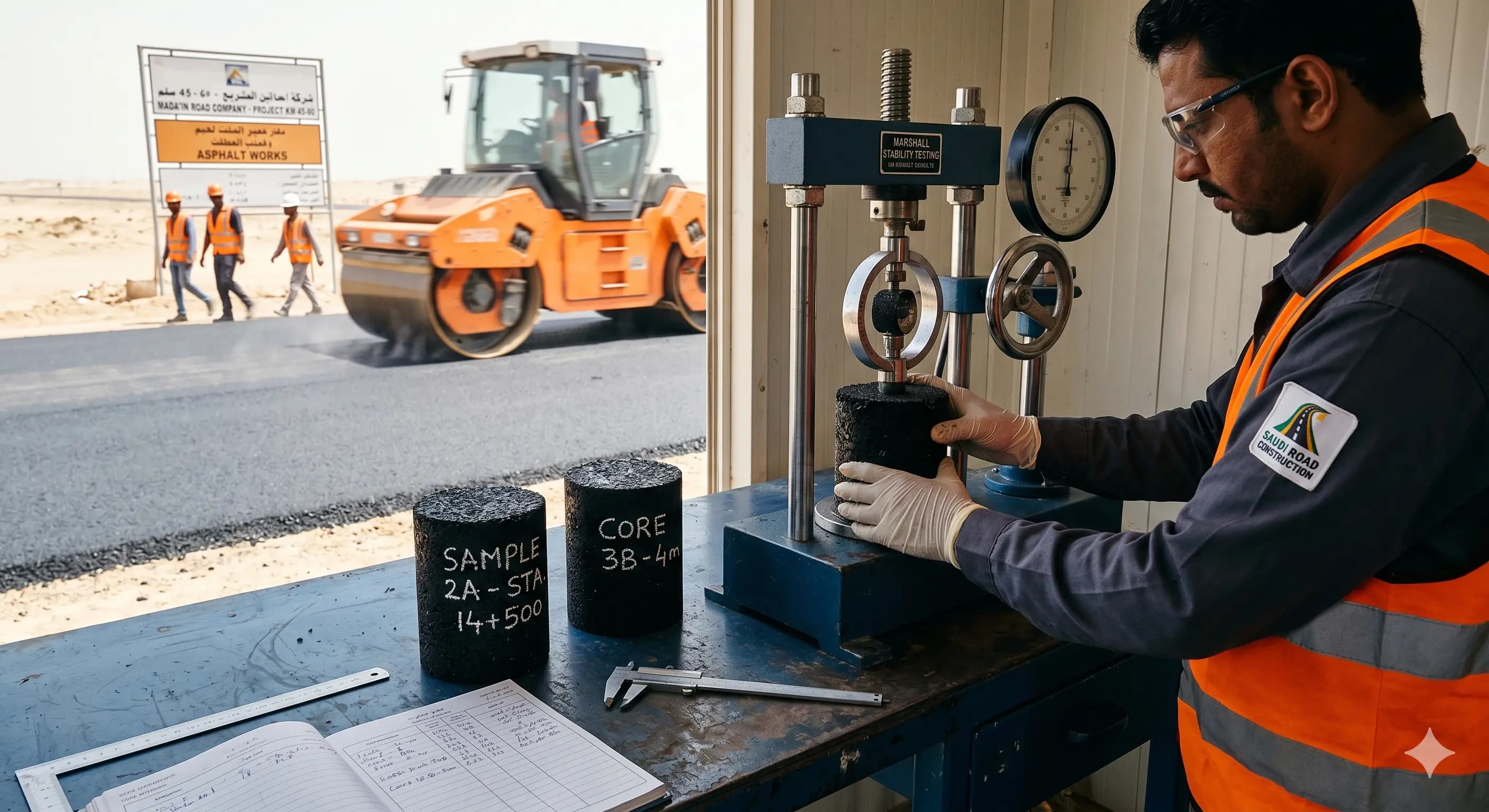
Asphalt
Asphalt mixture and pavement testing covering Marshall, binder content, gradation, Gmm, cores, thickness, density, and compaction to project specifications.

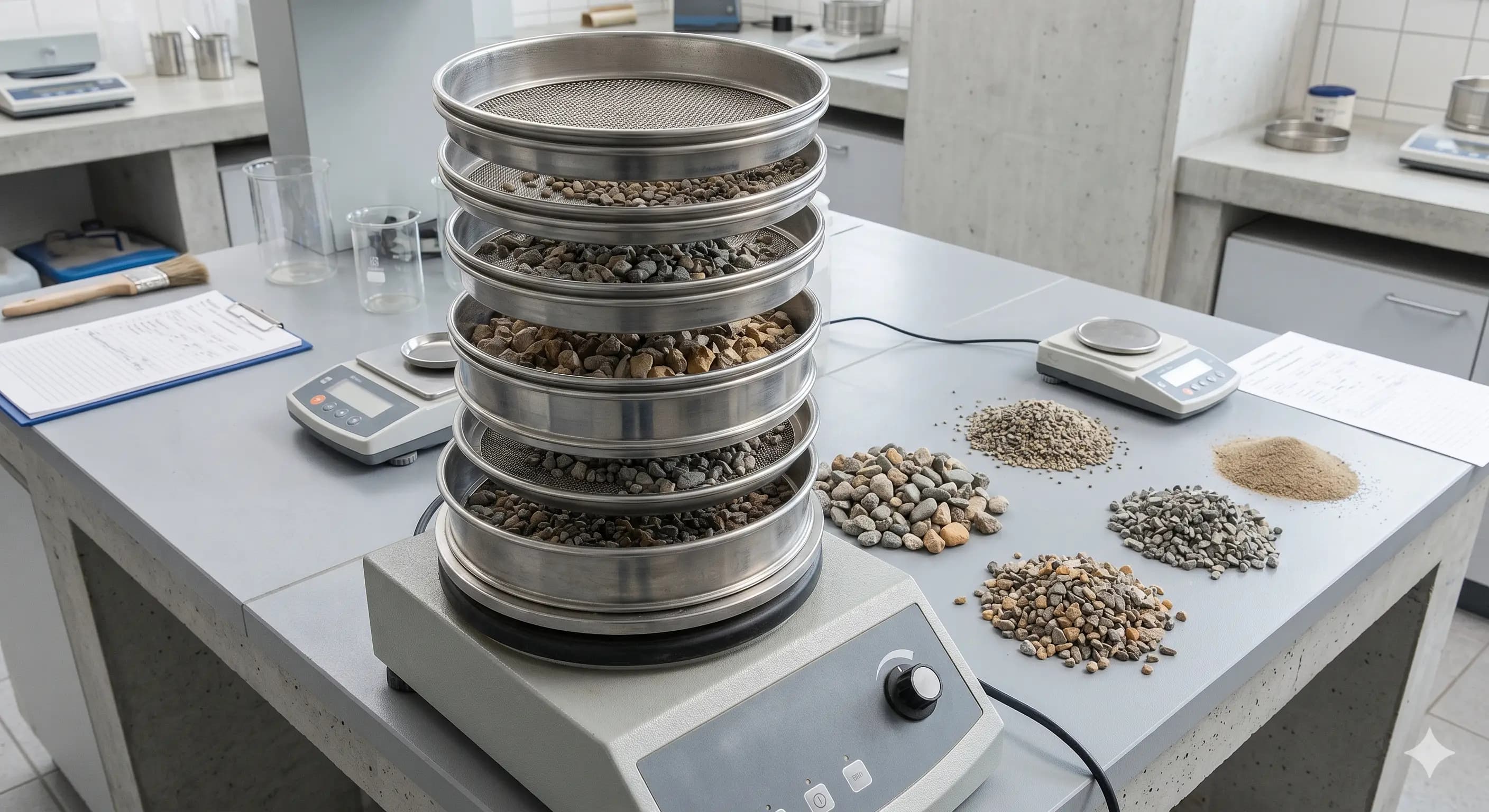
Aggregate
Fine and coarse aggregate testing for gradation, relative density, absorption, bulk density, abrasion, and soundness by intended use and project specification.

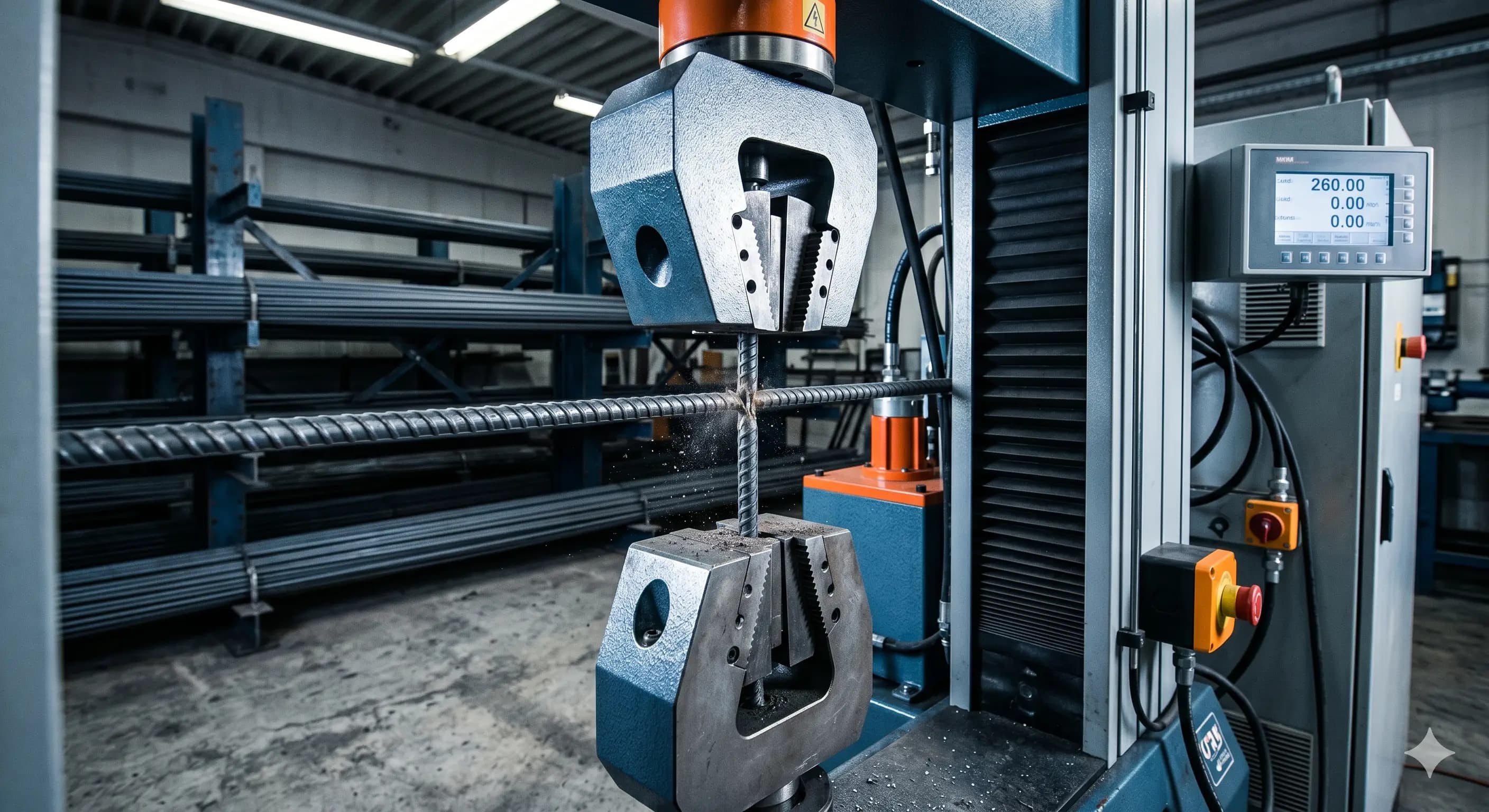
Rebar
Rebar batch testing covering yield, tensile strength, elongation, bend, mass per metre, and chemical composition under the specified grade and project standard.

Chemical
Chemical analysis of water, soil, and aggregate covering pH, sulfates, chlorides, and TDS — to determine environmental aggressiveness on construction materials.

Blocks
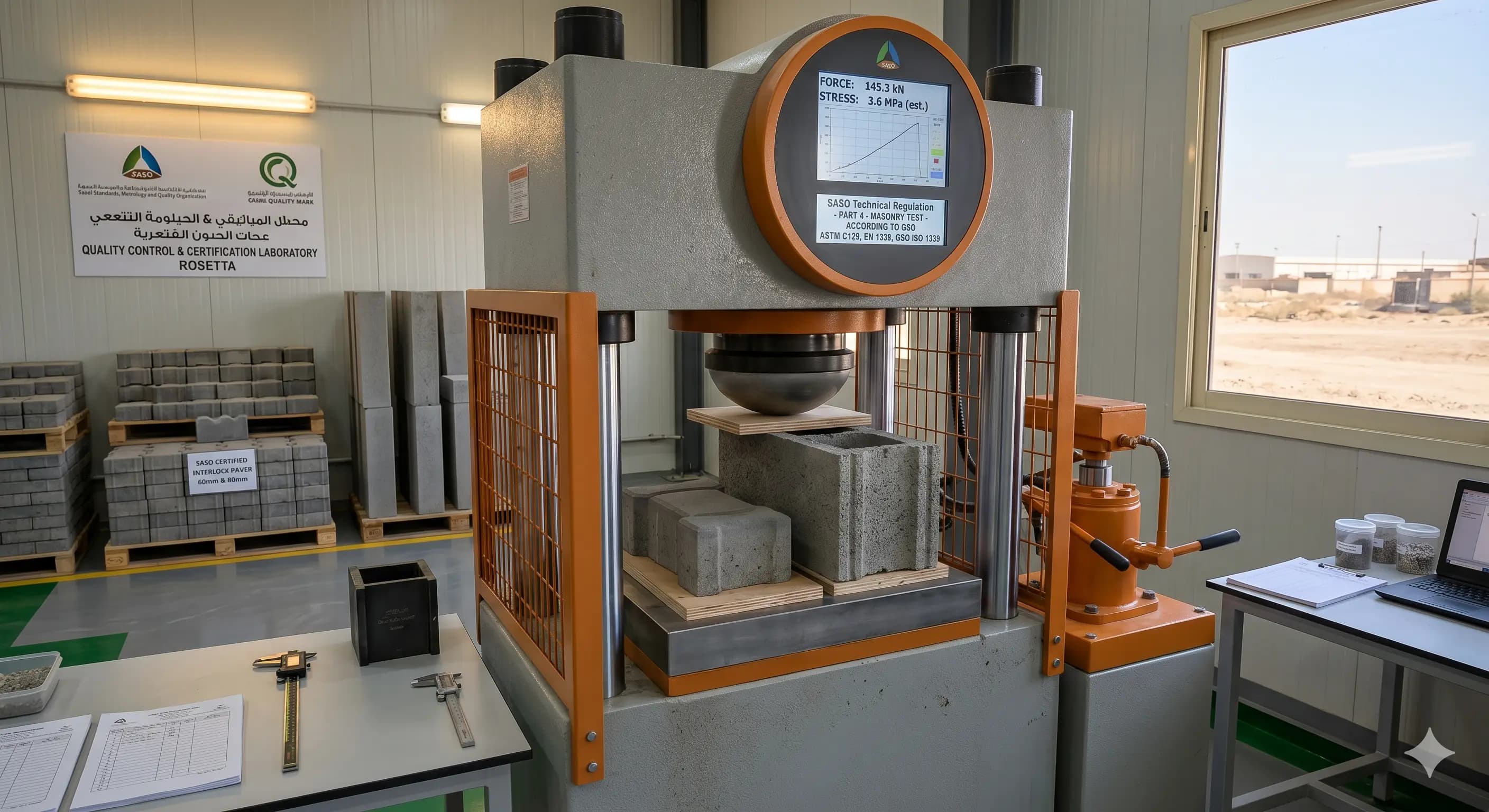
Testing for cement blocks, interlock pavers, and curbstones covering dimensions, compressive strength, water absorption, and density by product specification.
Our specialized team is ready to mobilize to your site anywhere in the Kingdom.