
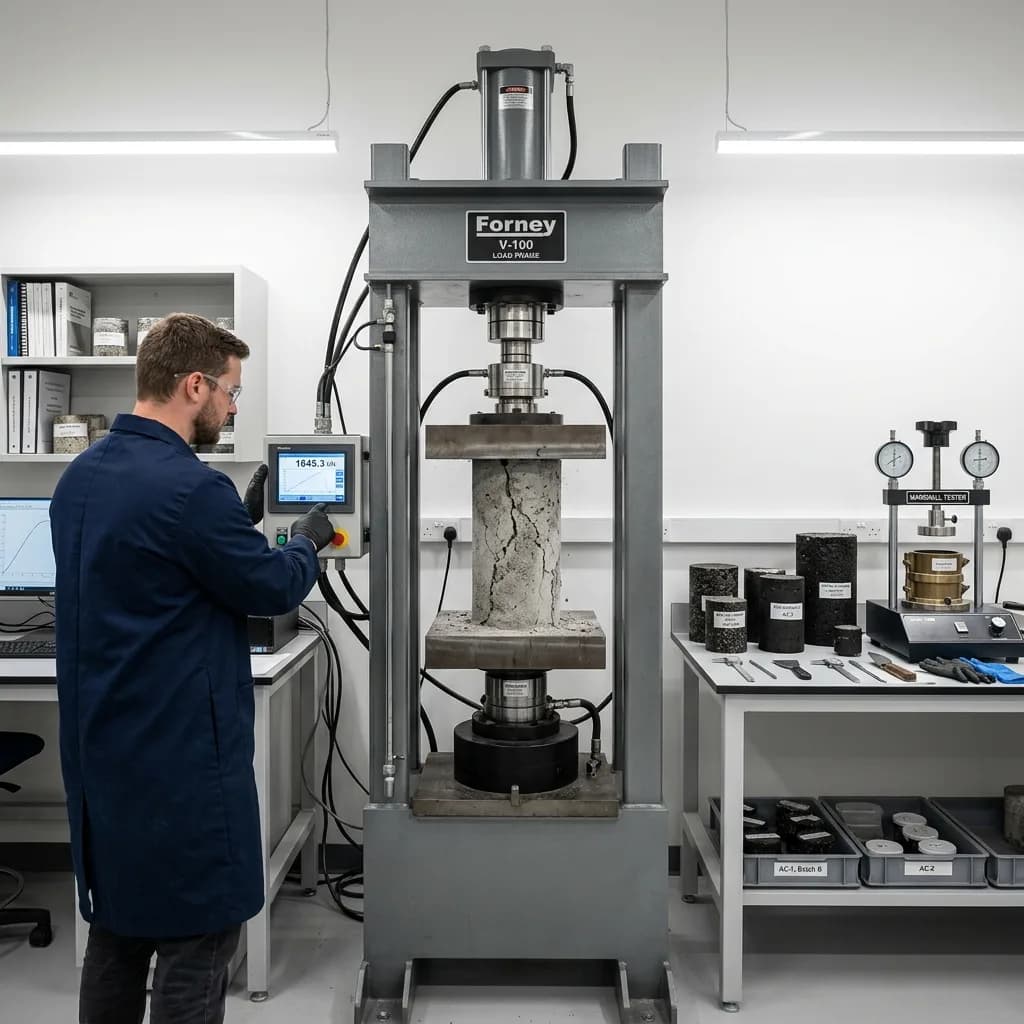
A building stands on its concrete, and a road lives by its asphalt — and neither reveals its defects to the naked eye. A flaw in the mix surfaces months later as cracking, settlement, or premature wear, when the cure costs tens of times more than prevention. That is precisely the role of laboratory concrete testing and asphalt testing: catching the defect while it can still be corrected.
What Exactly Does a Materials Lab Do?
The lab is a neutral inspection body that measures with instruments what the eye cannot see: concrete strength, workability, asphalt mix stability, and pavement layer density — then documents the results in certified reports on which the consultant bases acceptance or rejection.
- Independent verification that materials meet specifications and codes
- Protection for the owner against substandard materials paid for in full
- Technical backing for engineer and contractor decisions during execution
- A documented record that protects all parties in any dispute
Concrete Tests No Project Can Skip
Compressive strength — the final verdict
Cubes or cylinders are crushed in the lab at 7 and 28 days to prove the concrete reached its design strength. This result decides the structural element's fate: accept, remediate, or remove.
Slump — the site gatekeeper
Before the mixer is allowed to discharge, the slump cone measures workability and instantly exposes any water imbalance. A slump outside the range means the pour is rejected before it begins.
Split tensile
Assesses the concrete's resistance to cracking — information the designer needs to predict element behavior under tensile stresses.
Density and air content
Lower-than-required density or excess entrapped air means higher permeability and less durability against salts and moisture — a core concern in the Saudi environment.
Asphalt Tests That Build Roads That Last
Marshall — stability and flow
Determines the mix's capacity to carry traffic loads and the optimal bitumen content — the reference test for approving any mix before laying.
Pavement density after compaction
Measuring the laid layer's density proves compaction quality; under-compaction means rutting and early settlement no matter how good the mix — a common failure point on Jeddah's coastal road projects, where heat and humidity narrow the compaction window.
Layer thickness
Core samples confirm the executed thicknesses match the drawings — a layer thinner than designed distributes loads incorrectly and shortens the road's life.
Testing Checkpoints Across the Project
- Before execution: mix designs and material source approvals
- During pours: slump, temperature, and cube samples from every batch
- During paving: density of each layer before the next
- At handover: final verification tests for the record
- When defects appear: diagnostic testing (coring and more)
Why TECHNO Soil Lab?
- Modern equipment under a documented calibration program
- Engineers specialized in concrete and pavements
- A QC inspector who attends and documents pours on-site
- Fast, certified reports accepted by regulatory bodies
- Long experience across the Kingdom's building and road projects
Bottom Line
Testing at the right moment is the cheapest line in a project budget and the highest-yielding: it prevents rework, protects the schedule, and hands you a structure that lives out its full design life.
By Eng. Hussein Nafea
Frequently Asked Questions
When is a concrete pour rejected on-site?
Under Saudi specifications and the SBC, a batch is rejected when:
- The slump falls outside the mix design range
- Visible segregation or aggregate separation appears
- Concrete temperature exceeds 35°C in hot weather without countermeasures
- The mixing window lapses (90 minutes or 300 drum revolutions)
- Water is proven to have been added on-site after mixing
What does excess water do to concrete?
On-site water addition is the most widespread form of concrete adulteration:
- Each 1% rise in the w/c ratio cuts strength by about 5–6%
- The slump rises and the mix looks "easy," but the cement bond unravels
- The 28-day cubes fail — leading to demolition or costly core testing
That is why a TECHNO Soil Lab QC inspector attends pours to control and document these practices.