Laboratory Service

Aggregate Testing Laboratory: Gradation & Density

Fine and coarse aggregate testing for gradation, relative density, absorption, bulk density, abrasion, and soundness by intended use and project specification.

Aggregate Testing Laboratory: Gradation & Density

In Short

Aggregate testing evaluates a representative fine- or coarse-aggregate sample for its intended concrete, asphalt, or road-layer use. Scope can include gradation, fines, relative density and absorption, bulk density, abrasion, and soundness. Results are compared with the project grading envelope and limits; one package or limit does not fit every use.

Fine and Coarse Aggregate Testing Laboratory

Aggregate covers materials that differ by source, size, and use. Sand is not prepared or interpreted like gravel, and concrete aggregate may have requirements different from asphalt or base-course aggregate. A test request therefore begins with source, nominal size, intended use, and required specification.

Machine precision cannot rescue an unrepresentative sample. Particles can segregate during handling, and quarry faces or supplier stockpiles can change. Sampling and reduction should follow an appropriate plan while identity remains tied to the batch. The report describes the tested sample; supplier or stockpile representation depends on how and how often it was sampled.

Separate fine, coarse, and different-source aggregate samples
Compare particle-size distribution with the project grading envelope
Report relative density, absorption, and bulk density as distinct properties
Link abrasion or soundness results to the correct use and specification limits

Aggregate Testing Scope for Concrete, Asphalt and Roads

Tests follow the project question instead of one list being applied to every sample.

Gradation and Physical Properties

Tests describing size distribution, mass, volume, and water absorption.

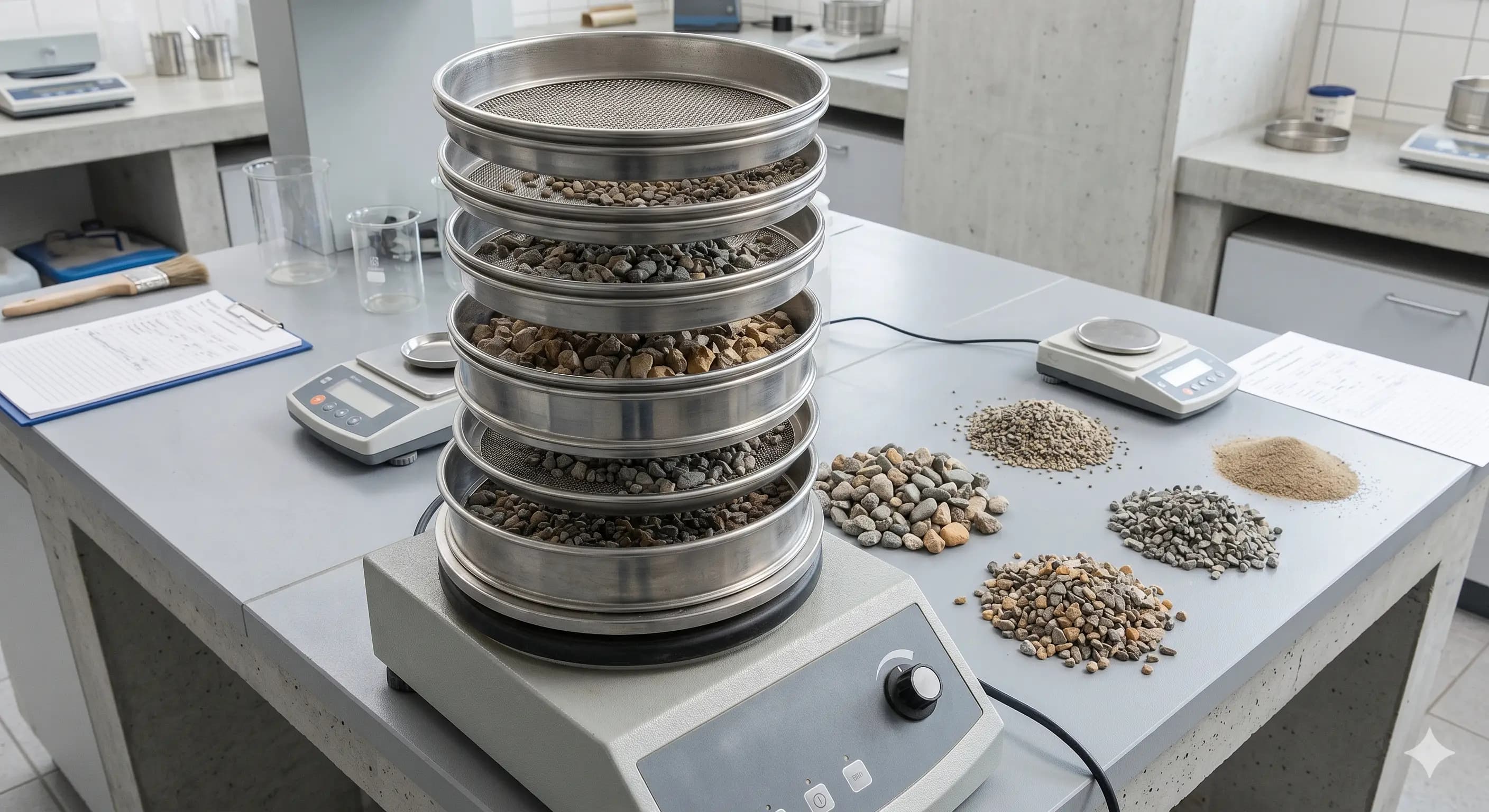
Sieve analysis and aggregate gradation
Material finer than the 75-μm sieve by washing where requested
Relative density and absorption for coarse or fine aggregate
Bulk density and voids where included in scope
Durability, Deleterious Materials and Classification

Tests selected according to use, exposure, and material source.

Los Angeles abrasion for gradings covered by the method
Sodium- or magnesium-sulfate soundness where specified
Clay lumps, friable particles, or specified deleterious materials
Petrographic examination where rock and component characterization is needed

Common Aggregate Testing Standards

The method, edition, and project limits are confirmed before any conformity evaluation.

ASTM C136/C136M

Sieve analysis of fine and coarse aggregates

ASTM C117

Material finer than the 75-μm sieve by washing

ASTM C127 / C128

Relative density and absorption of coarse and fine aggregate

ASTM C29/C29M

Bulk density and voids in aggregate

ASTM C131/C131M

Abrasion and impact of small-size coarse aggregate in the Los Angeles machine

ASTM C88

Aggregate soundness using sodium sulfate or magnesium sulfate

ASTM C142/C142M

Clay lumps and friable particles

ASTM C295/C295M

Petrographic examination of aggregates for concrete

From Aggregate Sample to Gradation Curve and Report

Source identity and sample reduction are part of result quality.

1

1. Define Source and Use

We collect aggregate type, source, batch, nominal size, intended use, specification, and requested tests.

2

2. Sample and Reduce

A representative sample is selected and reduced to test portions while limiting segregation and preserving identity.

3

3. Condition and Test

The sample is conditioned under the method before the specified gradation, density, absorption, or durability tests.

4

4. Report and Compare

The report presents values, curve, method, and supplied use limits, highlighting items needing review.

Questions Before Ordering Aggregate Tests From a Supplier or Quarry

Define what the sample represents and its comparison reference before submission.

1Does the sample represent a stockpile, delivery, or defined quarry face?
2Is the aggregate fine or coarse, and what are its nominal size and use?
3Which grading envelope or specification limits should be applied?
4Does “density” mean bulk density or relative density for this request?
5Will supplier reports use the same tests and sampling approach for comparison?

Information Needed for an Aggregate Testing Quote

List each source, size, and use separately so the quotation reflects the actual sample matrix.

Send These Details

Aggregate type: fine, coarse, or combined and material name
Supplier or quarry and batch number or stockpile location
Nominal size and concrete, asphalt, or road-layer use
Specification, edition, grading envelope, and comparison limits
Requested tests and sample count per source
Whether the laboratory samples the material or receives client-selected samples

What Affects the Price?

1Number of separate sources, batches, and sizes
2Sample quantity and drying or reduction requirements
3Gradation, density, absorption, and durability package
4Sampling visit, stockpile location, and travel distance
5Gradation curve, comparison, report format, and delivery schedule
Send Project Details on WhatsApp

Included Tests

8 field and laboratory tests available by project scope

Standard aggregate sampling

أخذ عينة من الركام

Unit: sample

Sieve Analysis

التدرج الحبيبي

ASTM C136

Unit: sample

Los Angeles Abrasion

مقاومة التآكل — لوس أنجلوس

ASTM C131

Unit: sample

Solar Reflectance Index (SRI)

مؤشر الانعكاس الشمسي (SRI)

ASTM C1549

Unit: sample

Clay Lumps & Friable Particles

نسبة المواد المفتتة (كتل طينية)

ASTM C142

Unit: sample

Magnesium Sulfate Soundness

مقاومة كبريتات المغنسيوم

ASTM C88

Unit: sample

Petrographic Classification

المكونات المعدنية (Petrographic)

ASTM C295 / C295M

Unit: sample

Specific Gravity & Absorption

الوزن النوعي ودرجة الامتصاص

ASTM C127 / C128

Unit: sample

Why Choose Us

Why TECHNO Soil Lab?

8
Available Tests

Field and laboratory tests selected to match the project scope

15+
Years Experience

Accumulated technical experience in testing & engineering consultancy

5
Cities Served

From our Makkah head office, via equipped field teams

What an Aggregate Test Report Contains

Final content follows the submitted sample, requested tests, and available limits.

Project, source, batch, aggregate type, and intended use
Sampling method where laboratory-selected and condition on receipt
Percent passing or retained and particle-size distribution curve
Relative density and absorption or bulk density as scoped
Requested abrasion, soundness, or deleterious-material results
Method, comparison, and flags for results needing review

Related Reading

Common Questions

FAQ About Aggregate Testing Laboratory: Gradation & Density

The mix or road-layer specification and quality plan define the package and frequency. Scope may include gradation, fines, relative density, absorption, bulk density, abrasion, soundness, or deleterious materials. Fine or coarse type, source, nominal size, and intended use should be identified first.

Need Aggregate Testing Laboratory: Gradation & Density Services?

Our specialized team is ready to mobilize to your site anywhere in the Kingdom.