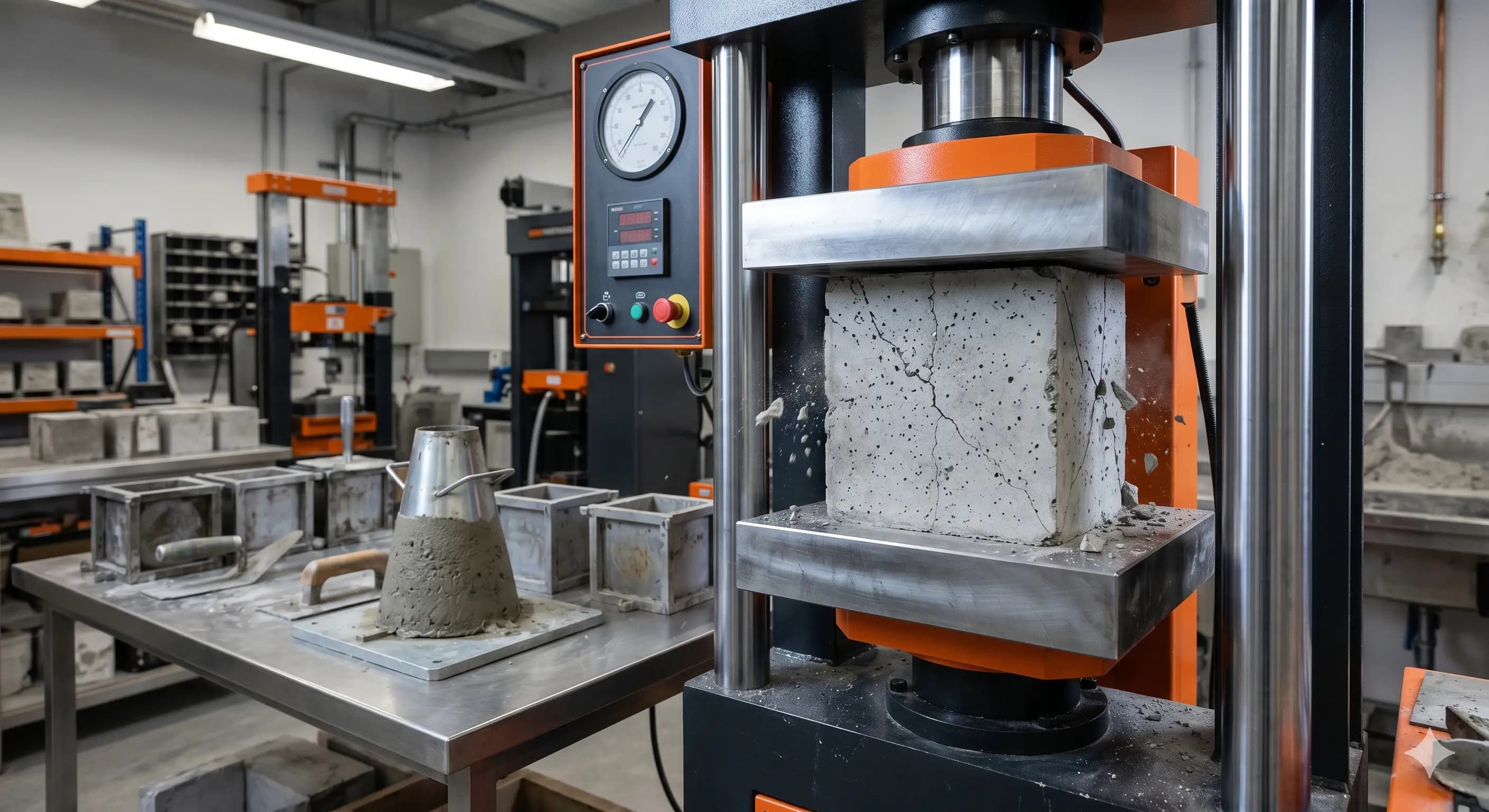
On Site During the Pour
Fresh-concrete checks and specimen records before laboratory transfer.
Fresh and hardened concrete testing covering slump, temperature, specimens, compressive strength, concrete cores, and non-destructive methods to project specifications.

In Short
A concrete testing laboratory evaluates fresh concrete on site and hardened concrete in the laboratory or an existing structure. The scope can include sampling, slump and temperature, compressive strength, concrete cores, and non-destructive tests. Test frequency, specimen quantity, ages, and acceptance criteria follow the project specification and approved inspection plan.
Concrete testing does not begin at specimen crushing. A useful result depends on representative sampling, recording the pour and element location, preparing and curing specimens, and applying the specified test method. We connect field records, specimen identification, and laboratory results in one traceable workflow.
The service supports pour monitoring, compressive-strength verification, and post-pour investigation when a result needs review or an existing structure is being assessed. The laboratory does not independently accept or reject a structural element; results are compared with the design requirement and project specification for the engineer or consultant to evaluate.
We define the test matrix from the project specification and concrete condition instead of applying one package to every project.
Fresh-concrete checks and specimen records before laboratory transfer.
Hardened-specimen tests or post-pour investigation for the defined purpose.
The governing method, sampling frequency, and acceptance criteria come from the approved project documents.
Making and curing concrete test specimens in the field
Slump testing of fresh concrete
Compressive strength of cylindrical concrete specimens
Obtaining and testing drilled cores from existing structures
Rebound number of hardened concrete using a Schmidt hammer
Ultrasonic pulse velocity through concrete
Electrical indication of resistance to chloride ion penetration
The schedule, visit count, and specimen matrix are confirmed in the scope before work starts.
1. Review Pour Requirements
We collect the site, pour window, structural element, design requirement, and inspection plan or consultant instruction.
2. Field Testing
The technician performs the agreed field tests, takes specimens, and records the pour and sampling details.
3. Transfer, Curing, and Testing
Specimens are transferred, cured, and tested at the specified ages while each specimen set remains identifiable.
4. Issue Results
The report presents specimen data, test method, results, and the recorded requirement, highlighting results that need technical review.
Agree on these points before the pour to avoid mismatched expectations after sampling.
Send the pour details and required scope so the quotation matches the project instead of relying on an inaccurate generic price.
12 field and laboratory tests available by project scope
Pour supervision + temp/slump + cube sampling (7 & 28 day)
الإشراف على صب الخرسانة + هبوط + عينات مكعبات (7 و28 يوم)
Unit: sample
Air Content
محتوى الهواء
Unit: test
Unit Weight
وزن الوحدة
Unit: test
Initial & Final Setting Time
زمن الشك الابتدائي والنهائي
Unit: test
Thermo Couple Test (mass concrete)
درجة حرارة الخرسانة الكتلية
Unit: test
Bleeding of Fresh Concrete
نسبة النضح
Unit: test
Concrete Core Samples (with report)
كور خرساني (مع تقرير)
Unit: sample
Ferro Scan (rebar detection)
الكشف عن حديد التسليح (Ferro Scan)
Unit: point
Schmidt Rebound Hammer
مطرقة الارتداد شميدت
Unit: point
Ultrasonic Pulse Velocity (UPVT)
الموجات فوق الصوتية (UPVT)
Unit: test
Half Cell Potential (corrosion)
نسبة الصدأ في حديد التسليح
Unit: test
Concrete Durability Package (5 tests)
حزمة ديمومة الخرسانة (5 اختبارات)
Unit: sample
Field and laboratory tests selected to match the project scope
Accumulated technical experience in testing & engineering consultancy
From our Makkah head office, via equipped field teams
Final report content depends on the test method and information supplied with the work order.
Use the guides to understand the methods, then send your project details to define the commercial scope.
Fresh-concrete tests are performed around the pour, including slump, temperature, air content, and sampling. Hardened-concrete tests include compressive strength, drilled cores, non-destructive methods, and durability tests. The project scope defines the required methods, frequency, and evaluation criteria.
Explore the rest of our accredited engineering tests in one place

Soil
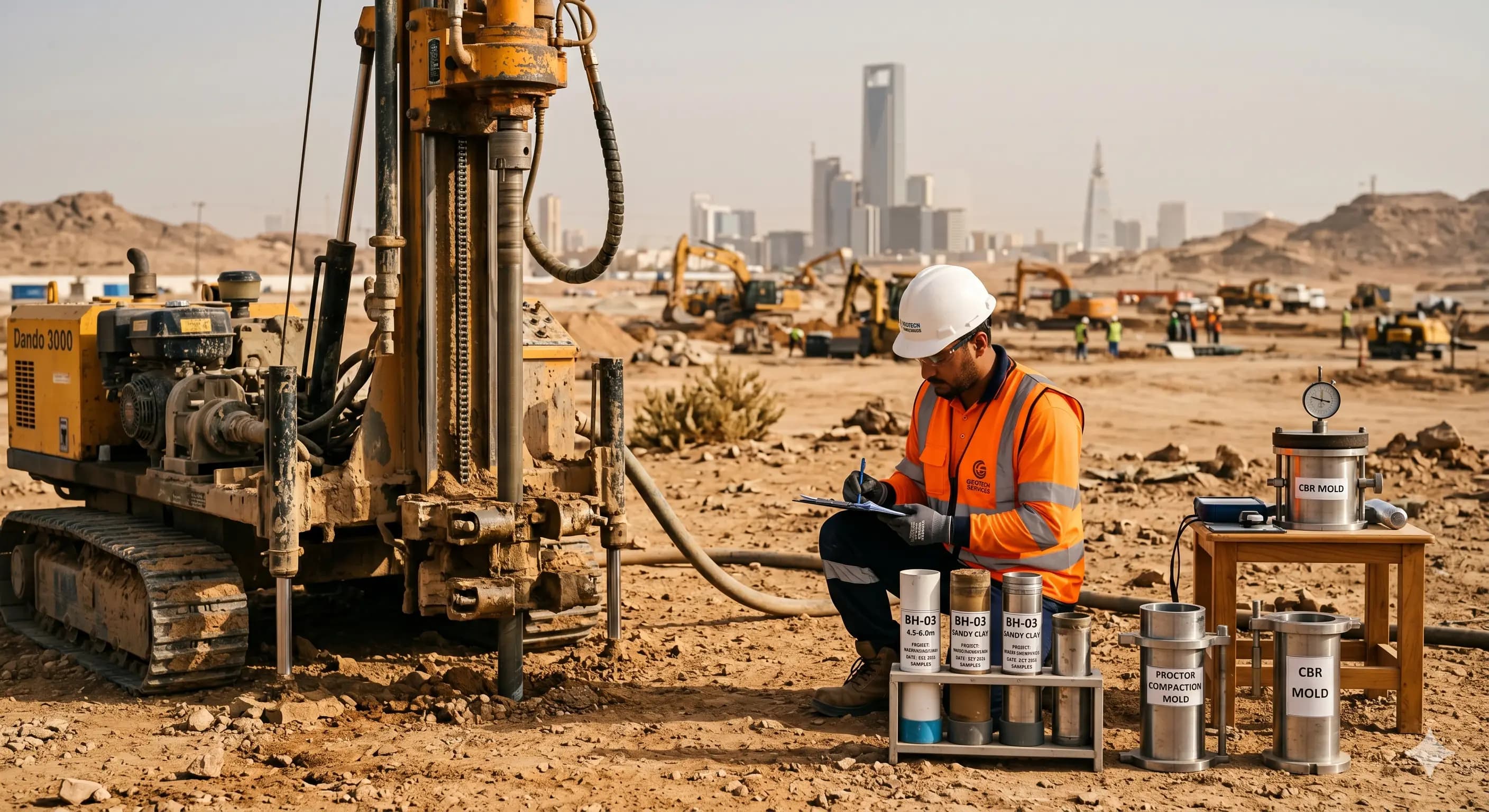
A soil testing laboratory covering pre-construction boreholes, in-situ testing, sampling, laboratory analysis, and geotechnical reporting according to each project's scope.

Asphalt
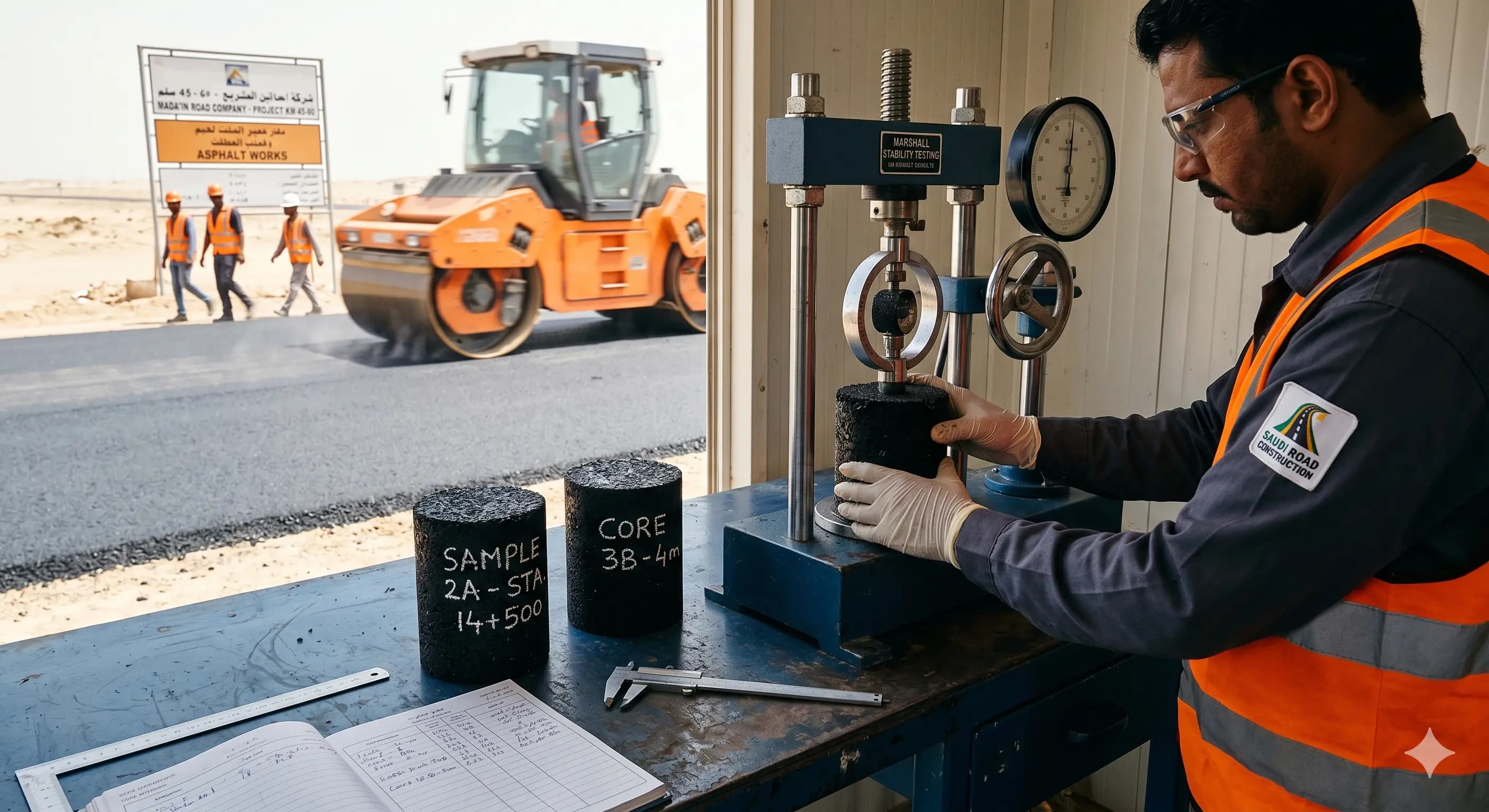
Asphalt mixture and pavement testing covering Marshall, binder content, gradation, Gmm, cores, thickness, density, and compaction to project specifications.

Aggregate
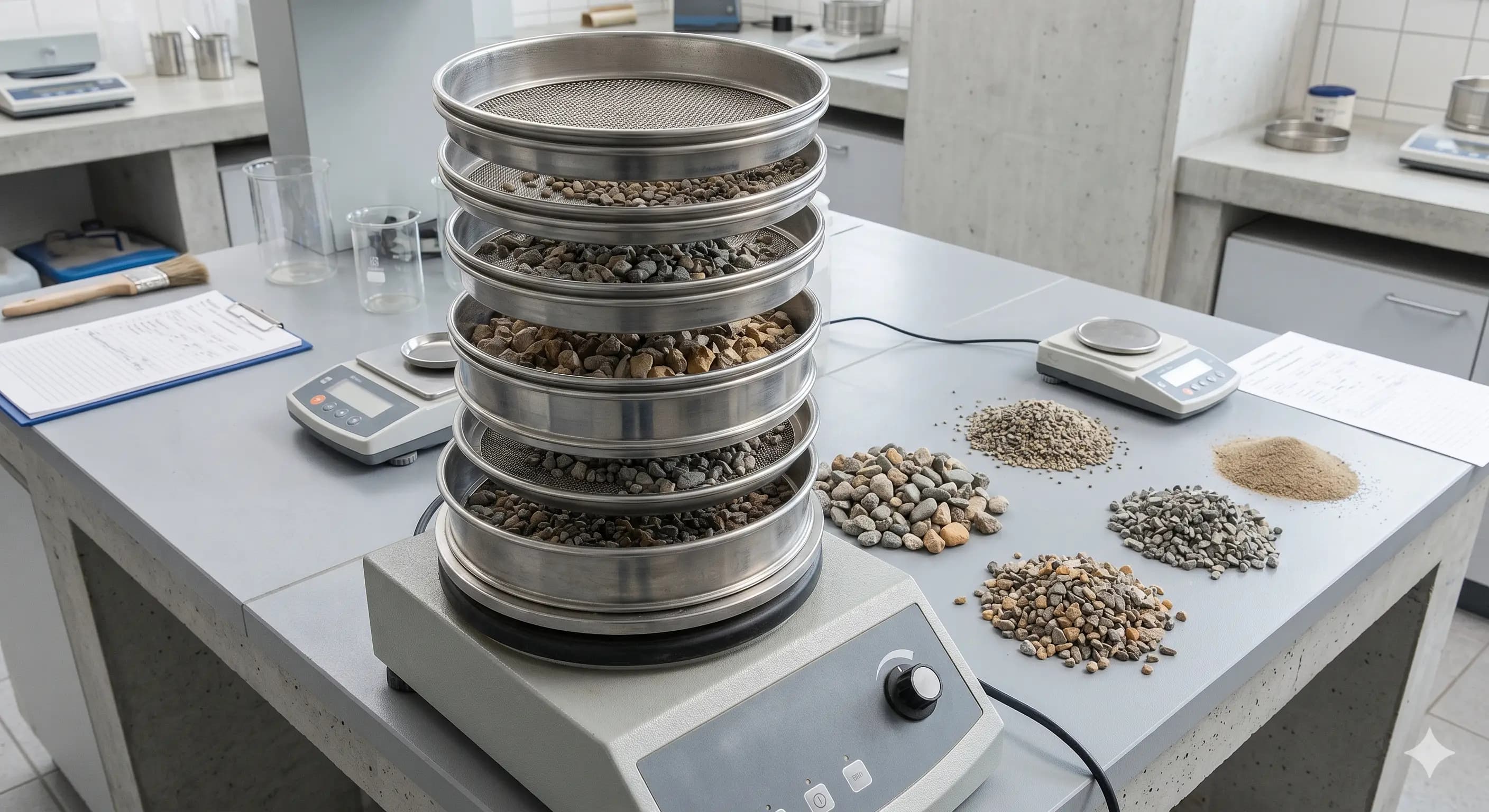
Fine and coarse aggregate testing for gradation, relative density, absorption, bulk density, abrasion, and soundness by intended use and project specification.

Rebar
Rebar batch testing covering yield, tensile strength, elongation, bend, mass per metre, and chemical composition under the specified grade and project standard.

Chemical
Chemical analysis of water, soil, and aggregate covering pH, sulfates, chlorides, and TDS — to determine environmental aggressiveness on construction materials.

Blocks
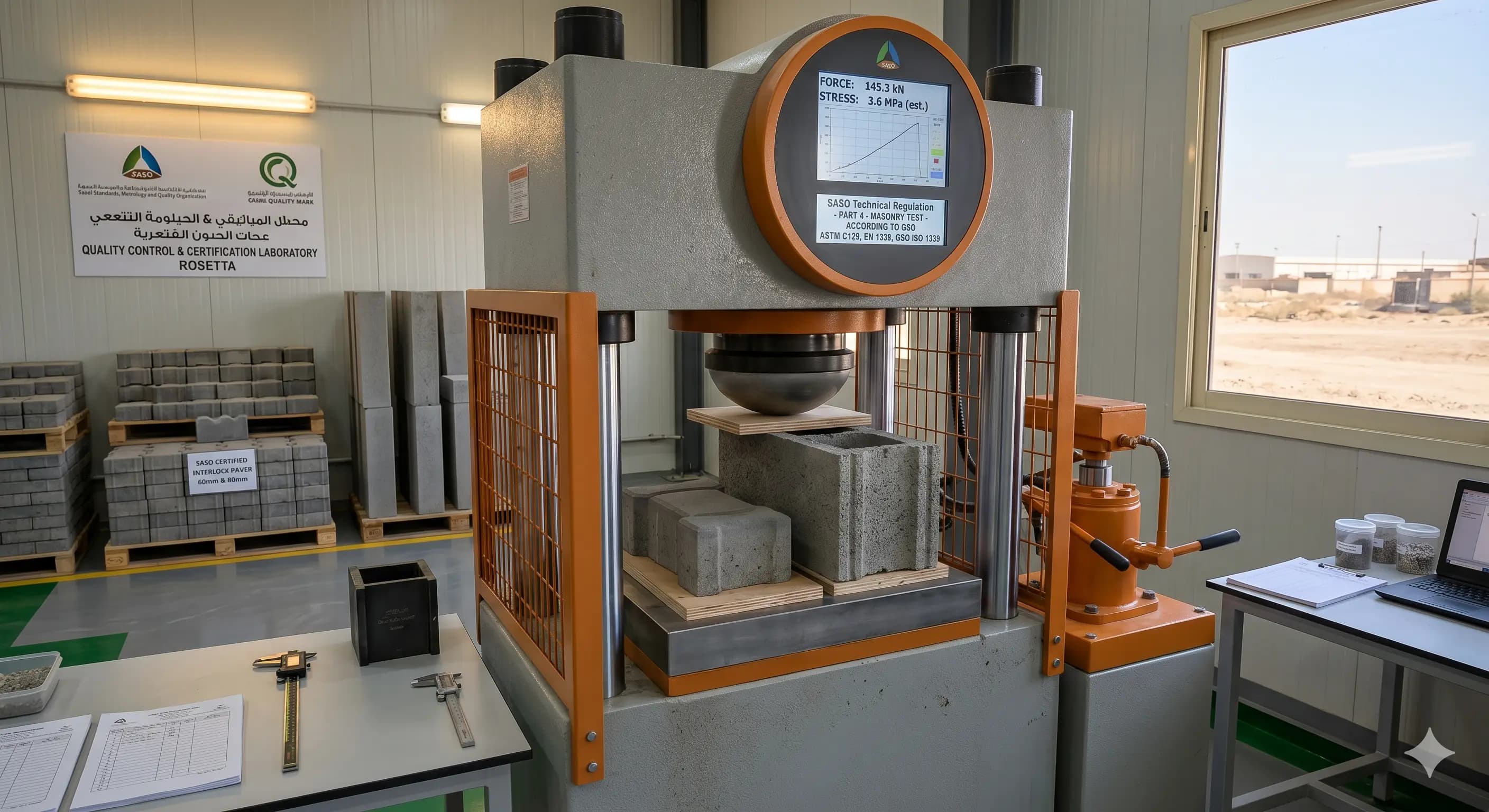
Testing for cement blocks, interlock pavers, and curbstones covering dimensions, compressive strength, water absorption, and density by product specification.
Our specialized team is ready to mobilize to your site anywhere in the Kingdom.