
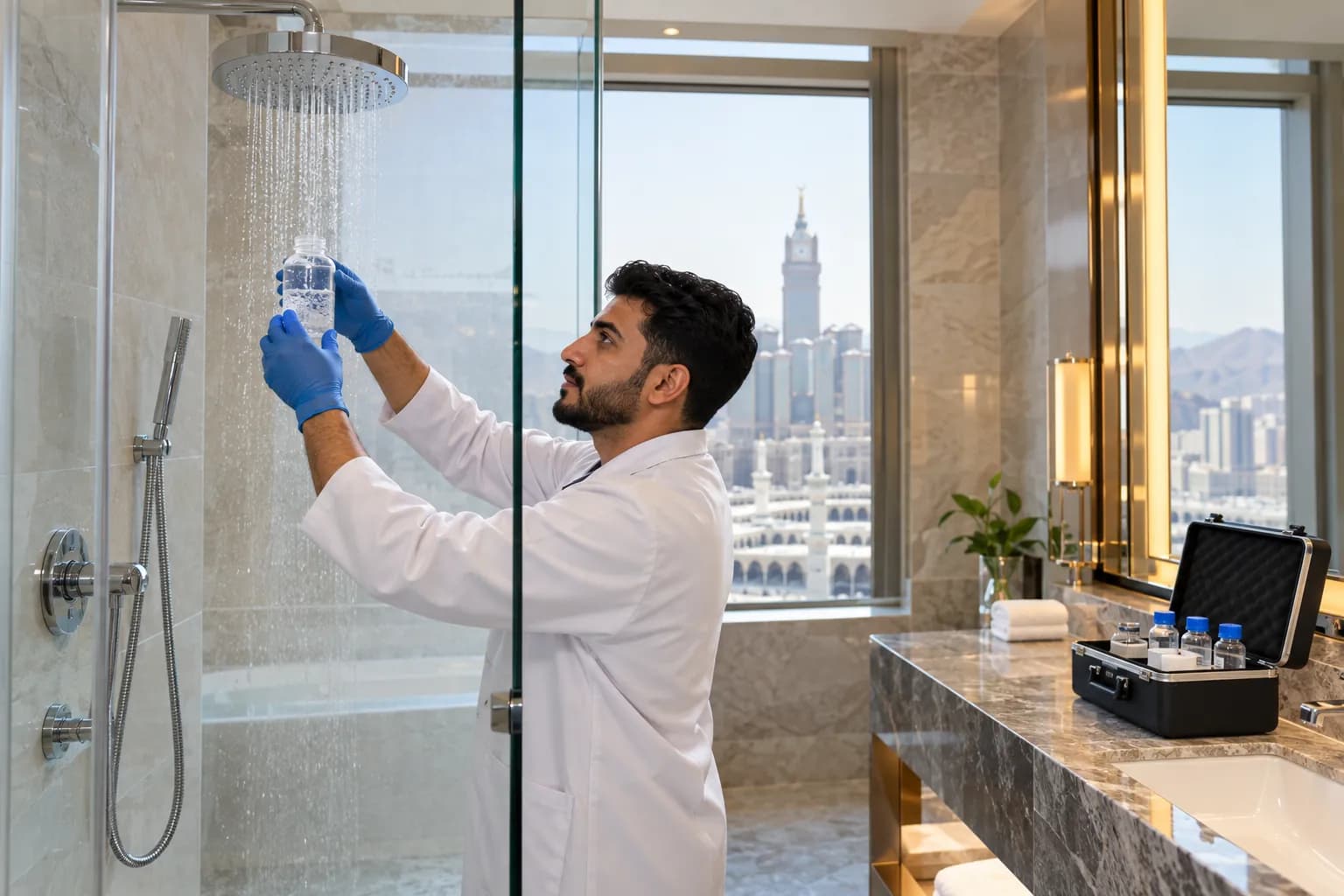
Why Shower Water Deserves Its Own Test Package
A guest may drink one glass of water, but uses about 80 liters during a shower and inhales the steam for roughly 15 minutes. A chemical imbalance can therefore become an immediate hotel complaint: irritated eyes, dry skin, rough hair, an objectionable odor, or staining on a towel or bathtub. The same water also travels through tanks, pipework, heaters, and shower heads, so a room complaint may be an early sign of corrosion or scale within the hotel's system.
This guide is written for engineering managers and hotel operators in Makkah and Jeddah: what each test measures, which complaint it can explain, and which asset may be affected. The package can be scoped through the laboratory's chemical water analysis service.
1. pH: Irritation and Corrosion or Dry Skin
The pH test shows whether the water tends toward acidity or alkalinity. Acidic water may cause itching and burning eyes, corrode chrome taps and copper pipes, create a blue color in the bathtub, and contribute to rust. Alkaline water can feel bitter and soapy while drying the skin and hair—the source of a guest complaint that her hair has become rough. The result connects a personal-comfort issue with the condition of the water network.
2. TDS and EC: Salty Taste and Clogged Showers
Total dissolved solids and electrical conductivity assess salts in the water from related perspectives. Salts can cause a salty taste, clog shower outlets, and attack stainless-steel heaters. If taste comments occur alongside poor flow or heater damage, salt testing gives the maintenance team a practical starting point instead of repeatedly replacing parts without diagnosing the water.
3. Chloride: Pipe Corrosion after Poor Desalination
Chloride matters when investigating pipe corrosion, particularly where the hotel uses inadequately desalinated water. The test does not judge the entire desalination system by itself, but it indicates whether chloride may be contributing to network damage. Reading it alongside pH and alkalinity gives the operator a clearer picture of the corrosive environment behind discoloration or recurring pipe problems.
4. Water Hardness: Poor Lather, Heater Scale, and Clogged Shower Heads
Hardness is the most important shower-water test in this package. It is a particular concern with well water in Makkah and Jeddah: calcium and magnesium behave like limescale, settling inside heaters and on bathroom surfaces. Hard water makes soap difficult to lather, leading a guest to think the hotel has supplied too little soap when the water is the real cause.
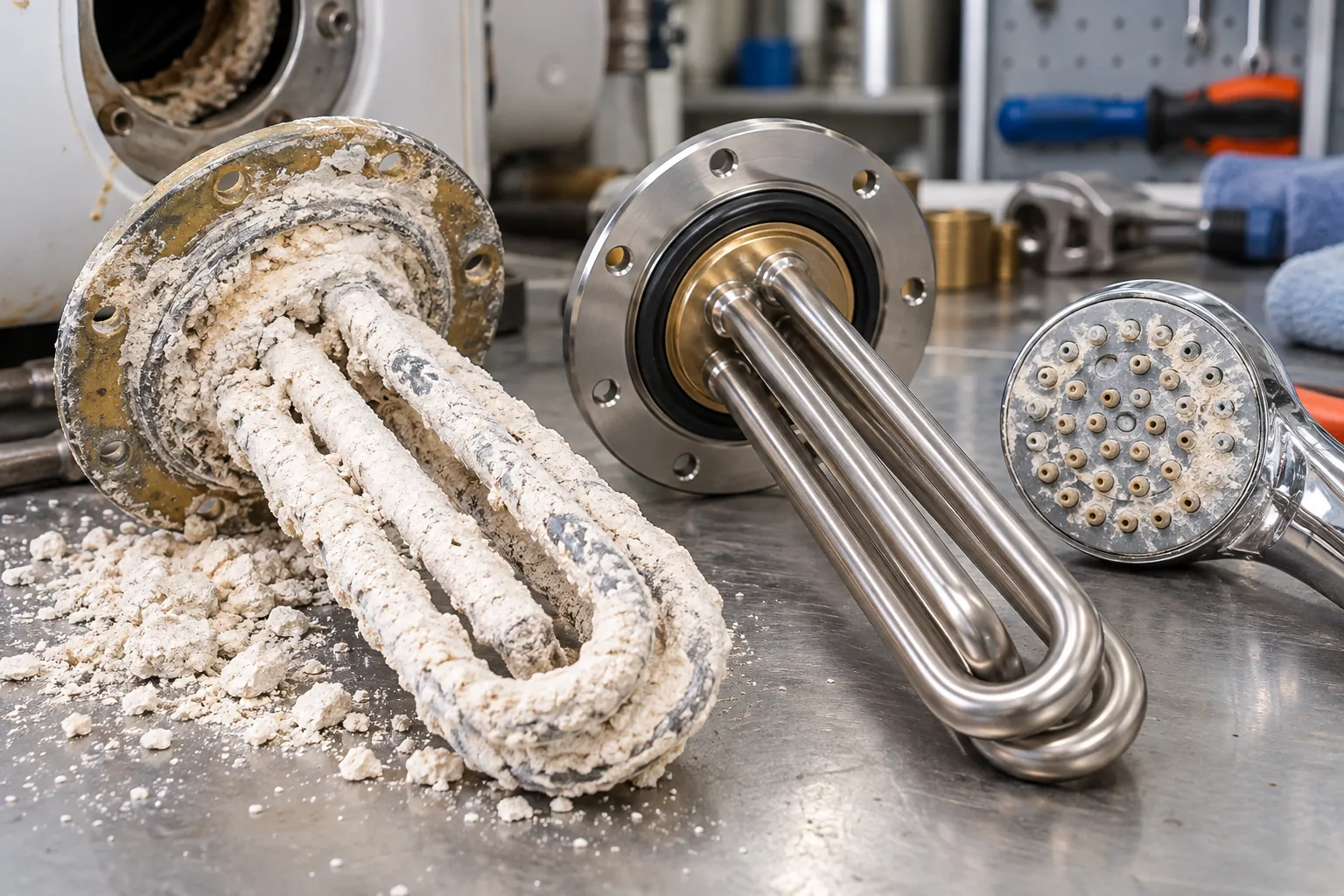
High hardness also leaves white scale on bathroom tiles and shower glass, lowering the perceived standard of cleanliness. A central water heater becomes scaled; every 1 mm of scale increases the electricity bill by 10%, and shower heads may clog after one month. The hardness result therefore connects guest experience, housekeeping appearance, energy consumption, and equipment condition.
5. Alkalinity: Stable pH and Protection for Pipes and Heaters
Alkalinity is the water's capacity to resist changes in acidity. Below 50 ppm, the water is highly aggressive: a drop of chlorine or acid can move pH from 7.5 to 5 within seconds, starting copper and iron corrosion and producing yellow or blue shower water. From 80 to 150 ppm, alkalinity is ideal, holding pH steady at 7–8 without corrosion or deposition. Above 300 ppm, strong white scale forms in heaters and boilers.
6. Free Chlorine: Disinfection without a Swimming-Pool Smell
Residual free chlorine is the balance between disinfection and irritation. At 0 ppm there is no disinfection, creating a Legionella risk. Legionella is a deadly bacterium that lives in shower steam and heaters and causes pneumonia. At 0.2–0.5 ppm, the level is ideal: disinfected water without an odor. Above 1 ppm, a strong swimming-pool smell appears in the bathroom, eyes and skin may become irritated, and clothing may be bleached. The result explains two opposite failures—no disinfectant protection or excessive chlorine.
7. Iron and Manganese: Stains That Damage the Hotel's Reputation
A guest does not need a laboratory report to form a negative impression from discolored water. Iron makes water yellow and leaves brown stains on white towels, which can upset the guest even when housekeeping has cleaned them properly. Manganese leaves black marks in the bathtub. Chemical testing links this discoloration and staining to its real source in the water, instead of treating it with cleaning products alone.
8. Sulfate: Explaining a Rotten-Egg Odor around Hot Water
When sulfate exceeds 250 ppm and combines with heater temperature, an H2S rotten-egg odor may appear in the bathroom. An operations team may focus on cleaning or ventilation because the odor is noticed in the room, while the connection between sulfate and heated water points the investigation toward the water and hot-water system. This result is considered alongside alkalinity to understand odor, scaling, and water behavior within hotel equipment.
Hotel Water Testing Package at a Glance
| Test | Complaint or Damage It Reveals | Reference Value |
|---|---|---|
| pH | Itching, burning eyes, dry hair, corrosion and rust | — |
| TDS and EC | Salty taste, clogged showers, stainless-steel heater damage | — |
| Chloride | Pipe corrosion | — |
| Hardness | Poor lather, white scale, heater scale, clogged showers | — |
| Alkalinity | Corrosion and yellow or blue water, or scale | Below 50 aggressive; 80–150 ideal; above 300 strong scale (ppm) |
| Free chlorine | No disinfection, or pool smell, irritation, and bleaching | 0 no disinfection; 0.2–0.5 ideal; above 1 odor and irritation (ppm) |
| Iron and manganese | Yellow water, brown stains, or black marks | — |
| Sulfate | Rotten-egg odor with heater temperature | Above 250 (ppm) |
When Should a Hotel Request the Package?
The package is useful when skin, hair, odor, or color complaints recur; when white scale, weak soap lather, or blocked shower heads are noticed; after changing the water source or desalination arrangement; and before a peak season when the hotel wants to reduce surprises in guestrooms and the hot-water system. Ideally, sampling is tied to a clear operational question and the results are read against the complaint pattern.
💡 Practical rule
Before changing soap, cleaning products, or shower heads, compare the complaint pattern with the water results. The symptom seen in the room may come from hardness, salts, pH, alkalinity, or chlorine.