
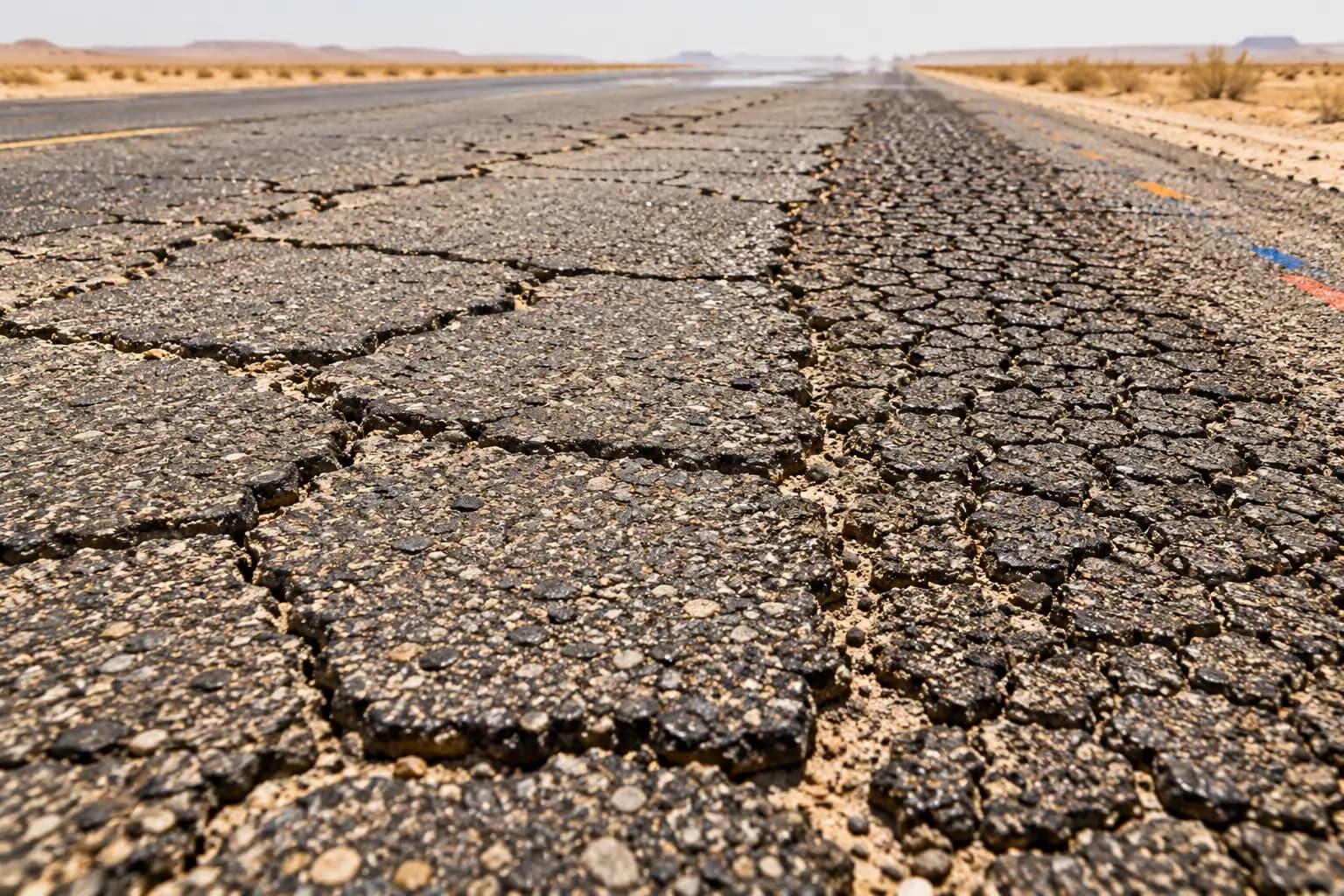
This guide explains why asphalt cracks, the types of cracking and what each one indicates, and the tests that help protect a project from the outset.
Why Does Asphalt Crack?
Asphalt is a relatively flexible layer made of aggregate—gravel, sand, and filler—bound together by bitumen. This flexibility allows the layer to carry vehicle movement and temperature changes. Cracking occurs when stress exceeds the layer's capacity or when the material loses flexibility over time.
The main asphalt cracking causes are:
- Temperature changes: expansion during the day and contraction at night, repeated daily.
- Bitumen ageing: sunlight and oxidation make bitumen harder and more brittle over the years.
- Incorrect bitumen content: too little bitumen produces a dry mix that breaks up and cracks easily.
- Poor compaction: inadequately compacted asphalt contains more air voids, allowing water and air to enter and accelerate deterioration.
- Weak base layers or soil: if the lower layers move under load, the asphalt above will crack regardless of its quality.
- Overloading: trucks carry weights above those for which the pavement was designed.
Asphalt Cracking as an Example of Thermal Expansion
Asphalt cracking is a familiar example of thermal movement: most materials expand when heated and contract when cooled. Asphalt absorbs solar heat and expands during the day, then contracts as temperatures fall at night.
The problem is not one cycle but thousands of repetitions. In a hot climate such as Saudi Arabia's, the difference between daytime and nighttime pavement-surface temperature can be substantial. Every expansion and contraction cycle produces internal stress. Once ageing bitumen has reduced the layer's flexibility, it can no longer absorb this movement and cracks appear. Thermal cracks therefore often develop years after construction rather than in the first few months.
Types of Asphalt Cracks and What Each One Indicates
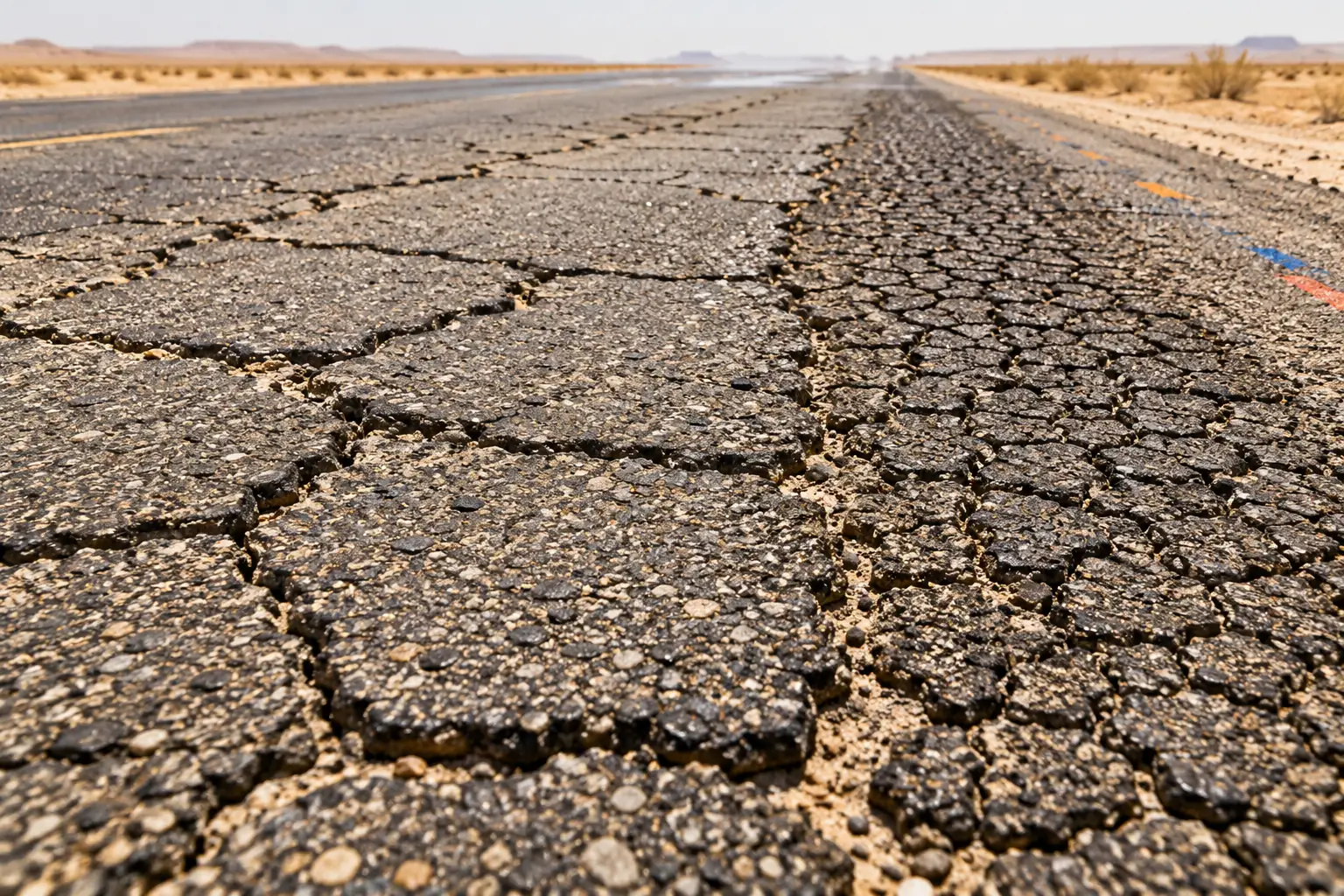
Crack shape provides valuable clues to its cause, so an engineer begins a pavement assessment by identifying the cracking type.
Alligator Cracking (Fatigue Cracking)
A network of small connected cracks resembling alligator skin, usually found in vehicle wheel paths. It generally indicates that the pavement can no longer withstand repeated loads. The underlying cause is often in the base or soil beneath the asphalt, or in insufficient pavement thickness.
Longitudinal Cracking
Cracks running parallel to the road. They may result from a weak joint between lanes paved at different times, thermal contraction, or settlement at the pavement edge.
Transverse Cracking
Cracks perpendicular to the road direction, commonly associated with thermal contraction and the hardening of bitumen as it ages.
Block Cracking
Cracks dividing the surface into large squares or rectangles. They are generally associated with aged bitumen that has lost flexibility or a mix containing less bitumen than required.
Reflective Cracking
Cracks appearing in a new asphalt layer above existing cracks or joints in the layer below. This often happens when a new overlay is placed on a cracked road without treating the old cracks first.
Slippage Cracking
Crescent-shaped cracks following vehicle movement, especially in braking and turning areas. They usually indicate poor bonding between two layers because the tack coat was insufficient or improperly applied.
Causes Tests Can Reveal Before Cracks Reach the Road
This is the most important point for a contractor, consultant, or owner: many causes of cracking can be detected in a laboratory before they become a road defect.
Bitumen Content in the Mix
A bitumen extraction test within asphalt testing measures the mix's actual bitumen content and compares it with the approved job mix formula (JMF). A deviation from the design is a major cause of premature cracking or surface disintegration.
Aggregate Gradation
Aggregate is the load-carrying skeleton of the mix. Nonconforming gradation means a weaker, less stable mix, which is why quality and grading are checked through aggregate testing before and during production.
Mix Stability and Flow (Marshall Test)
The Marshall test measures the mix's capacity to carry loads and the amount it deforms, helping confirm that the produced mix matches the designed mix.
Density After Compaction
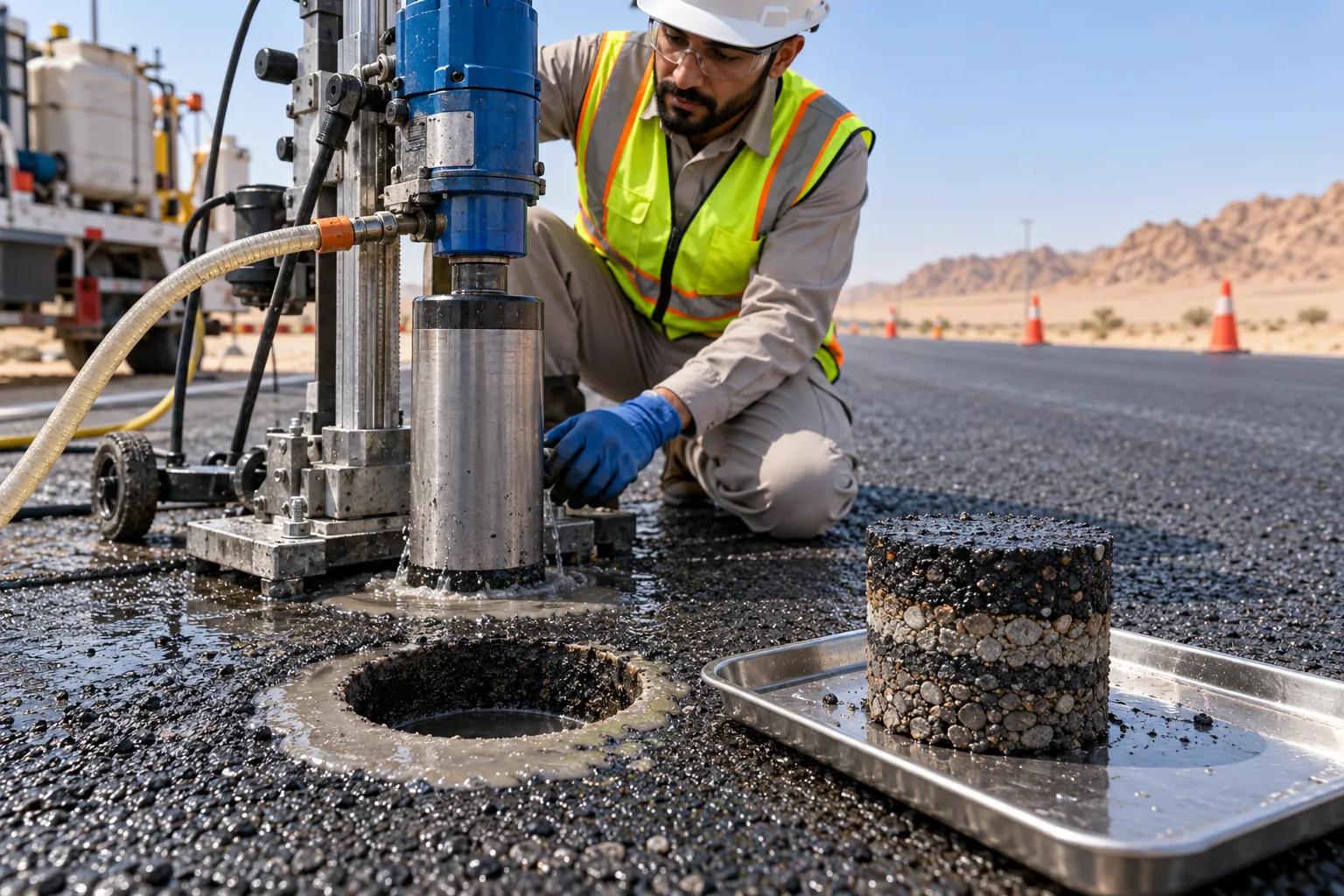
After laying and compaction, cores are taken from the finished layer. Their density is measured and compared with the target density. Low density means more air voids, a shorter pavement life, and faster cracking.
Prime-Coat and Tack-Coat Application Rates
Poor bonding between layers is a cause of slippage cracking, so prime-coat and tack-coat application rates are checked during construction.
Soil and Base Layers
Prevention does not stop at the asphalt itself. Soil and base layers beneath the road must be compacted to the required density and capable of carrying the load, so soil laboratory testing and lower-layer compaction checks precede paving work.
💡 Practical Rule
Use testing to find mix, compaction, or base-layer deviations before they become visible cracking and a road-repair cost.
How Are Asphalt Cracks Repaired?
The treatment depends on the crack type and its cause, so the cause must be identified first:
- Isolated fine cracks: clean and fill them with crack-sealing material to prevent water entry.
- Cracking confined to a small area: remove the damaged material and patch it with a new mix.
- Extensive alligator cracking: this often signals a deeper problem and may require milling the layer, treating the base, and repaving.
- Ageing roads with widespread cracks: milling and repaving may be required, with treatment of old cracks to prevent reflective cracking.
Placing a new layer over a cracked road without identifying the cause is one of the most expensive mistakes because the cracks often return through the new layer.
Protect Your Paving Project from Premature Cracking
TECHNO Soil Lab performs field and laboratory asphalt tests: bitumen extraction, aggregate gradation, Marshall testing, core density after compaction, and layer application rates, with results compared against the approved mix design. Our field teams cover Makkah, Jeddah, Madinah, Riyadh, and Al-Qassim.