
What Is Concrete and What Is It Made Of?
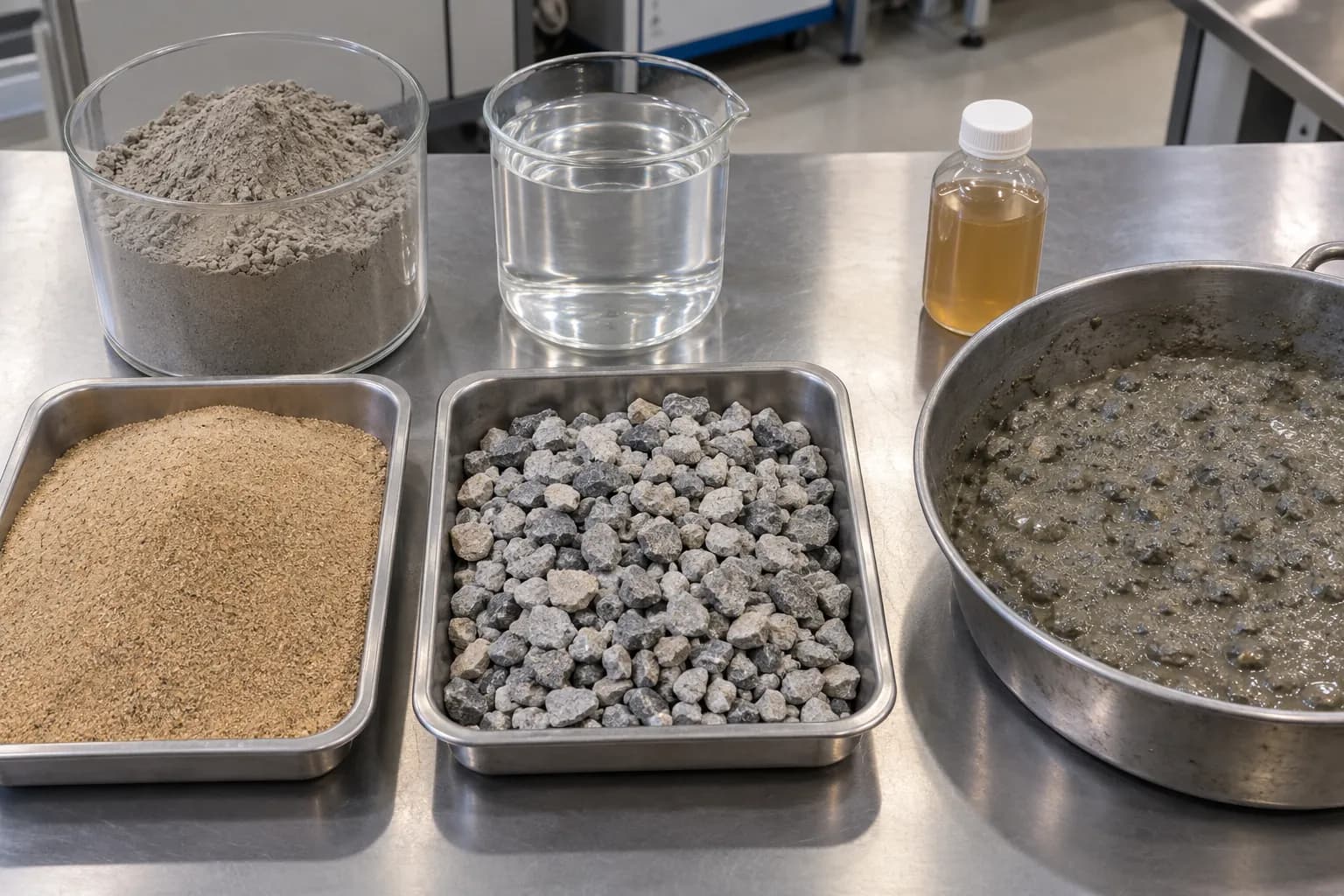
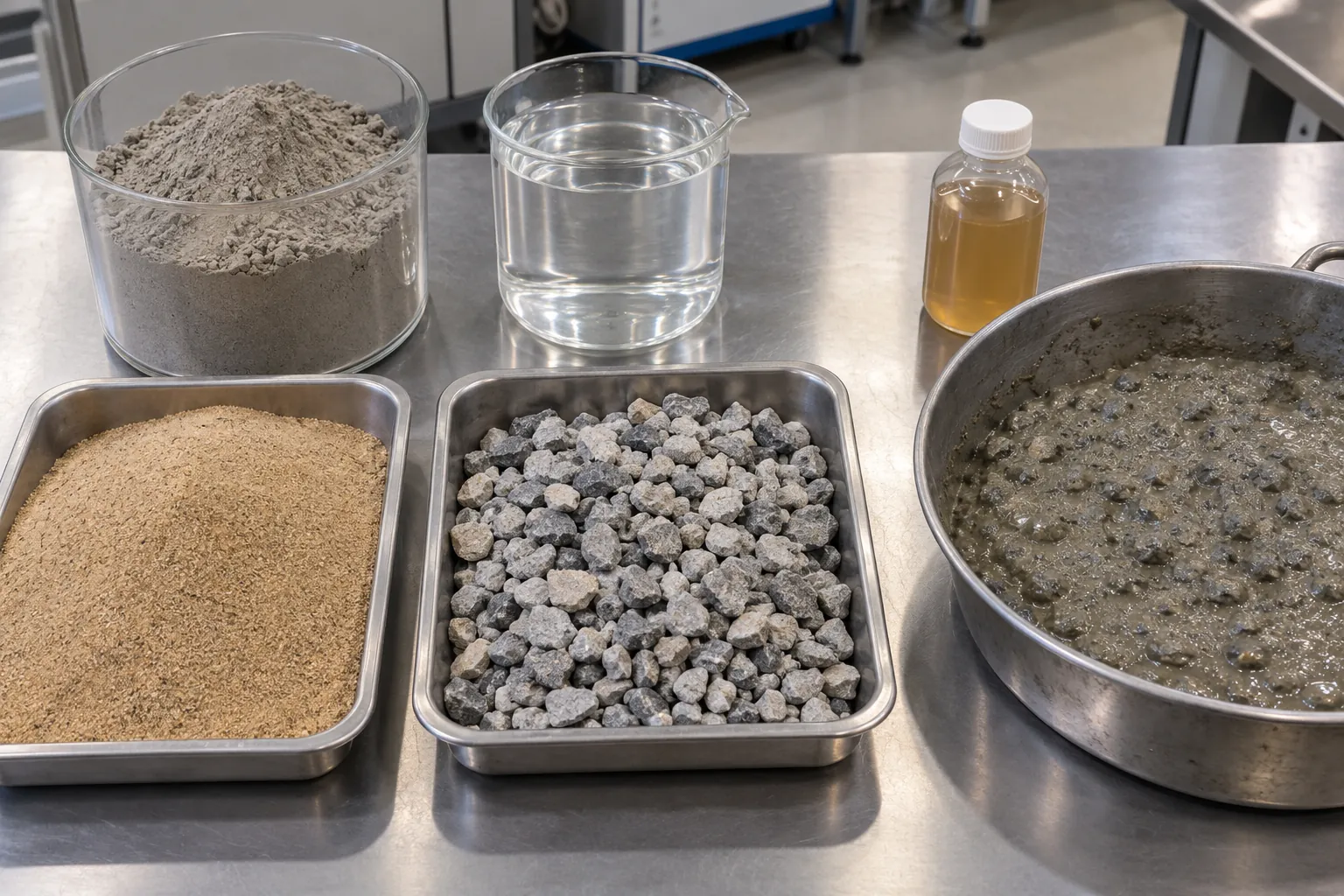
Concrete is a mixture of cement, water, fine aggregate (sand), and coarse aggregate (gravel or crushed stone). Chemical admixtures may be added to improve particular properties. Mixing cement with water starts hydration, which binds the aggregate particles and gives the mixture strength as it hardens.
Concrete is very strong in compression but weak in tension, so reinforcing steel is added in structural elements. The water-to-cement ratio is one of the most important controls on quality: excess water makes placement easier but reduces strength and increases porosity.
Types of Concrete by Reinforcement and Use
Plain Concrete
Concrete without reinforcing steel, commonly known on site as blinding concrete. It is used beneath foundations to create a clean, level surface before the footing is poured, as well as in nonstructural floors and falls. It is not used for elements carrying structural loads.
Reinforced Concrete
The most widely used type in buildings: steel reinforcement carries tensile forces while concrete carries compression. It is used in foundations, columns, beams, and slabs. Its quality depends on both concrete and steel, so both require testing—concrete strength on one side and rebar tensile, yield, and bend properties on the other.
Precast Concrete
Concrete elements are cast and cured in a factory, then transported to the site and installed. Examples include hollow-core slabs, fences, and prefabricated walls. Its advantages are speed and consistent quality because casting and curing conditions are controlled.
Prestressed Concrete
High-strength steel or tendons are tensioned so that the concrete enters a pre-compressed state before service loading. This allows longer spans with thinner sections. It is used in bridges, long-span slabs, and parking structures.
Types of Concrete by Production Method
Ready-Mix Concrete
Produced at central batching plants to predetermined proportions and transported to site in mixer trucks. It is common on most projects because it is faster and more consistent than manual mixing. However, "ready-mix" does not automatically mean "conforming": travel time, temperature, and water added on site can all alter the mix before placement, so fresh concrete is tested when the truck arrives.
Site-Mixed Concrete
Mixed at the project site and generally used for small quantities. It needs closer control over proportions and material quality, especially aggregate, because poor gradation or dirty sand directly affects strength.
Types of Concrete by Weight
- Normal-weight concrete: used in most structures and made with conventional natural aggregate.
- Lightweight concrete: made with lightweight aggregate or entrained air and used to reduce dead loads and provide thermal insulation.
- Heavyweight concrete: made with high-density aggregate and used for special applications such as radiation-shielding walls.
Types of Concrete by Strength (Concrete Grades)
A concrete grade is commonly designated C25, C30, or C40. The number expresses the target compressive strength in megapascals after 28 days. The structural designer specifies the required grade in the project drawings according to the element and loads; it is not a site decision for the contractor or owner.
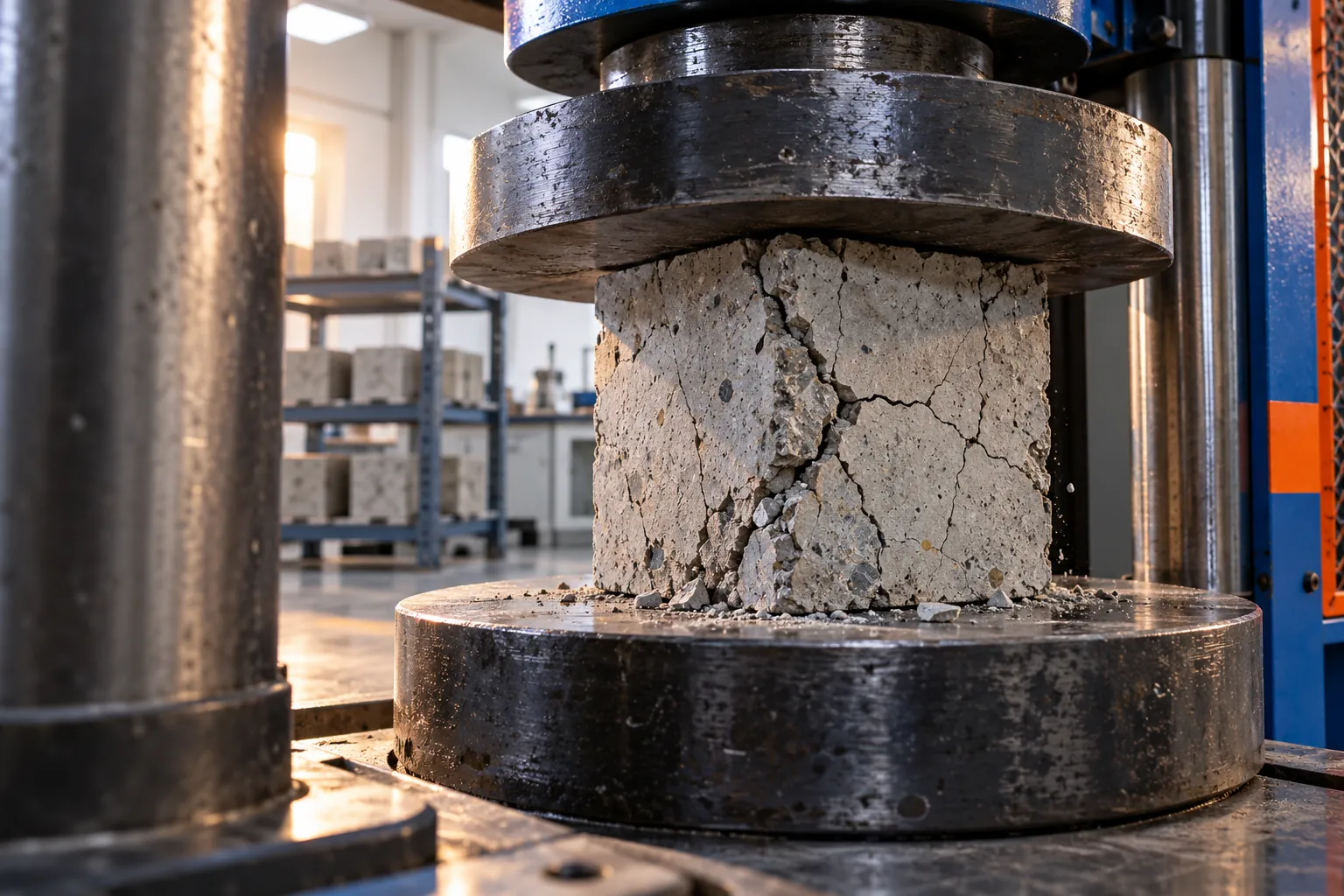
Lower grades are generally used for blinding and nonstructural work, medium grades for structural elements in residential buildings, and higher grades for heavy structures, towers, and elements exposed to severe conditions. The essential point is that only laboratory compressive-strength testing can confirm whether the concrete actually achieved its required grade.
Sulfate-Resistant Concrete: When Does a Project Need It?
This is among the most important types of concrete in Saudi Arabia because soil or groundwater in some areas is rich in sulfates and chlorides. Sulfates react with components of ordinary cement and cause concrete to expand and crack. Chlorides attack reinforcing steel and cause corrosion. The result is early foundation deterioration that may not appear for years.
The solution begins before pouring, not afterward. Chemical analysis of soil and groundwater measures sulfate and chloride content. The result is used to classify soil aggressiveness and select the appropriate cement, such as sulfate-resistant cement. If the soil is not aggressive, the owner avoids the cost of unnecessary special cement; if it is aggressive, the project is protected from a problem that is difficult to repair later.
Other Concrete Types Encountered on Projects
- Self-compacting concrete (SCC): a highly flowable concrete that fills formwork and surrounds congested reinforcement without vibration.
- High-strength concrete: used in columns and tall buildings to reduce element dimensions.
- Concrete modified with admixtures: for example, concrete with set retarders in hot weather, common in Saudi Arabia because high temperature accelerates setting before placement is complete.
How Do You Verify Concrete Quality on Your Project?
Whatever the concrete type, relying on the supply order is not enough. Quality is demonstrated through a concrete testing laboratory in two stages:
- Fresh-concrete tests when the mixer arrives: slump to assess workability, mix-temperature measurement, and sampling cubes or cylinders. These tests can reveal a change in the mix before it is placed in the element.
- Hardened-concrete tests in the laboratory: principally compressive-strength testing after 7 and 28 days, with results compared against the grade required by the drawings. If an existing element is in doubt, a concrete core can be extracted and tested.
Concrete quality also begins with its components, so materials are tested before mixing. Key aggregate tests include gradation, absorption, and cleanliness.
💡 Practical Rule
Select the concrete type and grade from the design and site conditions, then verify the mix through fresh- and hardened-concrete testing.
Build Confidence in Your Project's Concrete
TECHNO Soil Lab carries out fresh-concrete testing at your project site and hardened-concrete testing in the laboratory, with technical reports stating whether results conform to the required specification. Our field teams cover Makkah, Jeddah, Madinah, Riyadh, and Al-Qassim.