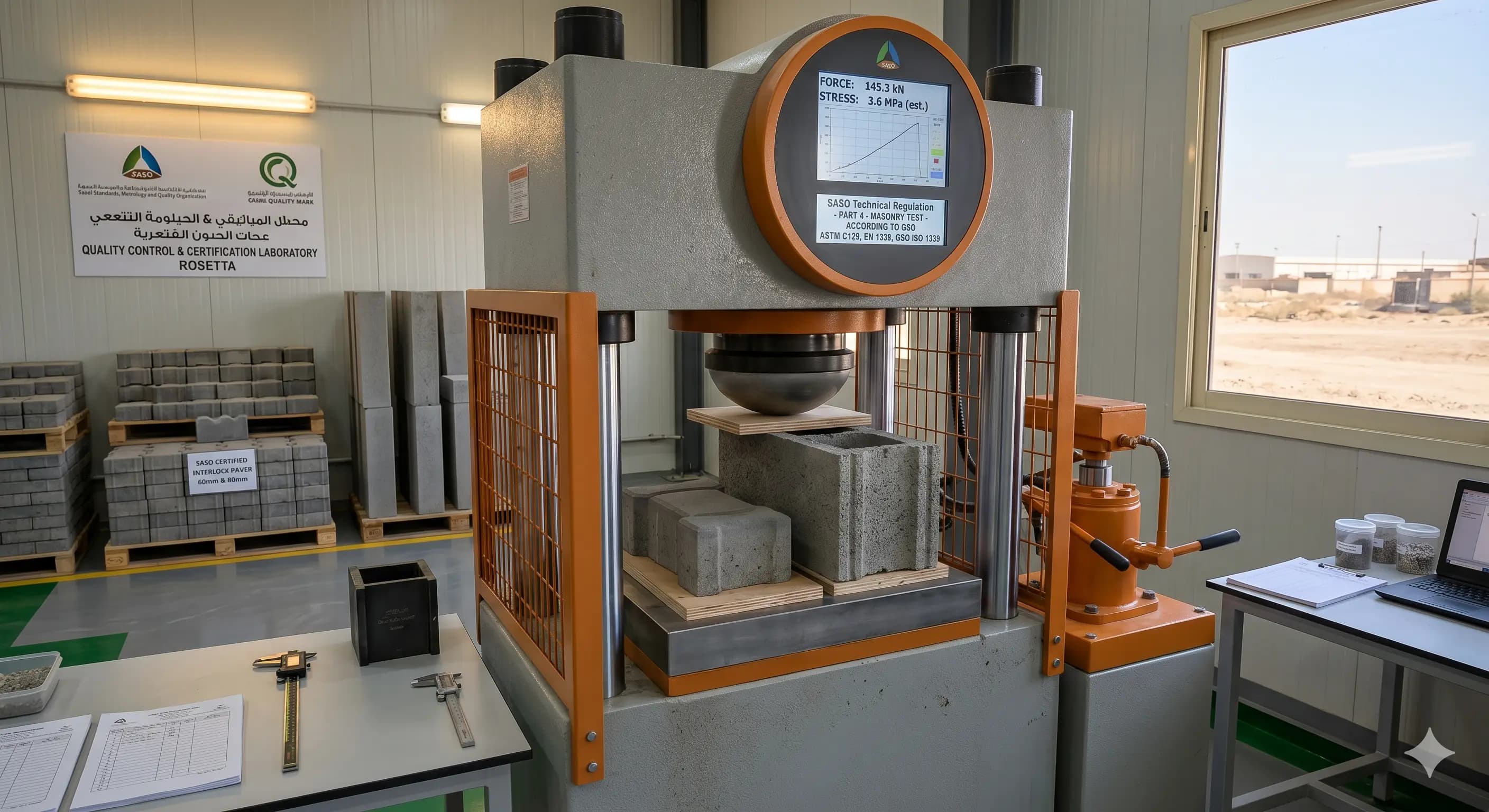
Concrete and Cement Blocks
Testing solid or hollow units under the project classification.
Testing for cement blocks, interlock pavers, and curbstones covering dimensions, compressive strength, water absorption, and density by product specification.

In Short
Block, interlock-paver, and curbstone testing measures properties of submitted product samples, such as dimensions, compressive strength, water absorption, and density where requested. The service starts by identifying the unit, intended use, governing specification, and sampling plan; results are then compared with the project-supplied limits rather than one value for every product.
Block products differ by material, configuration, and use: solid or hollow, load-bearing or non-load-bearing, insulating or lightweight, plus paving units and curbstones. A request saying only “block” is incomplete. Product type, size, intended use, batch, and specification are needed for the correct test and comparison.
Testing a delivered batch provides evidence about the tested samples. Result reliability begins with a sampling plan representing the batch, protected transport, and clear specimen identification. The laboratory records results against supplied requirements; acceptance of the entire delivery follows the quality plan, contract, and authorized project decision.
Unit type and intended use define the test; blocks, pavers, and curbstones are not treated as one product.
Testing solid or hollow units under the project classification.
Tests for paving or edging units according to product form and specification.
The required standard and edition are confirmed in the work order before comparison or conformity evaluation.
Sampling, dimensions, compression, absorption, and density for specified concrete units
Specification for load-bearing concrete masonry units where adopted
Specification for non-load-bearing concrete masonry units where adopted
Specification for solid concrete interlocking paving units
Product limits, classification, and tolerances stated in the contract or named Saudi specification
A usable result needs representative samples and a defined request, not unidentified units.
1. Define Product and Requirement
We collect product type, use, nominal size, manufacturer or batch data, standard, and acceptance limits.
2. Sample and Identify
Samples are selected under the project plan or received with source, quantity, condition, and visible damage recorded.
3. Measure and Test
Dimensions and specified strength or absorption tests are performed, recording specimen preparation and result calculations.
4. Report and Compare
The report lists each specimen result and the project-supplied requirement, flagging deviations for authorized review.
Confirm product identity and batch representation before sending specimens.
Send each product's details as a separate sample to avoid an incorrect scope or quotation.
6 field and laboratory tests available by project scope
Compressive Strength
مقاومة إجهاد الكسر
Unit: sample
Water Absorption
نسبة الامتصاص
Unit: sample
Dimensions
الأبعاد
Unit: sample
Fire Resistance (blocks)
مقاومة الحريق (بلوك)
Unit: sample
Flexural Strength (where required by product standard)
مقاومة الانحناء (عند طلبها حسب مواصفة المنتج)
Unit: sample
Splitting Tensile Strength (where required)
مقاومة الشد الانشطاري (عند طلبها)
Unit: test
Field and laboratory tests selected to match the project scope
Accumulated technical experience in testing & engineering consultancy
From our Makkah head office, via equipped field teams
The report reflects submitted samples and requested tests; it does not automatically extend to all factory production.
Use the guides to understand materials, then identify the product specification before ordering tests.
The package may include dimensions and wall thickness, compressive strength, water absorption, density or mass, and other product-specific checks. Send the block type, classification, intended use, and required standard because calculations and comparison limits differ between load-bearing, non-load-bearing, solid, and hollow units.
Explore the rest of our accredited engineering tests in one place

Soil
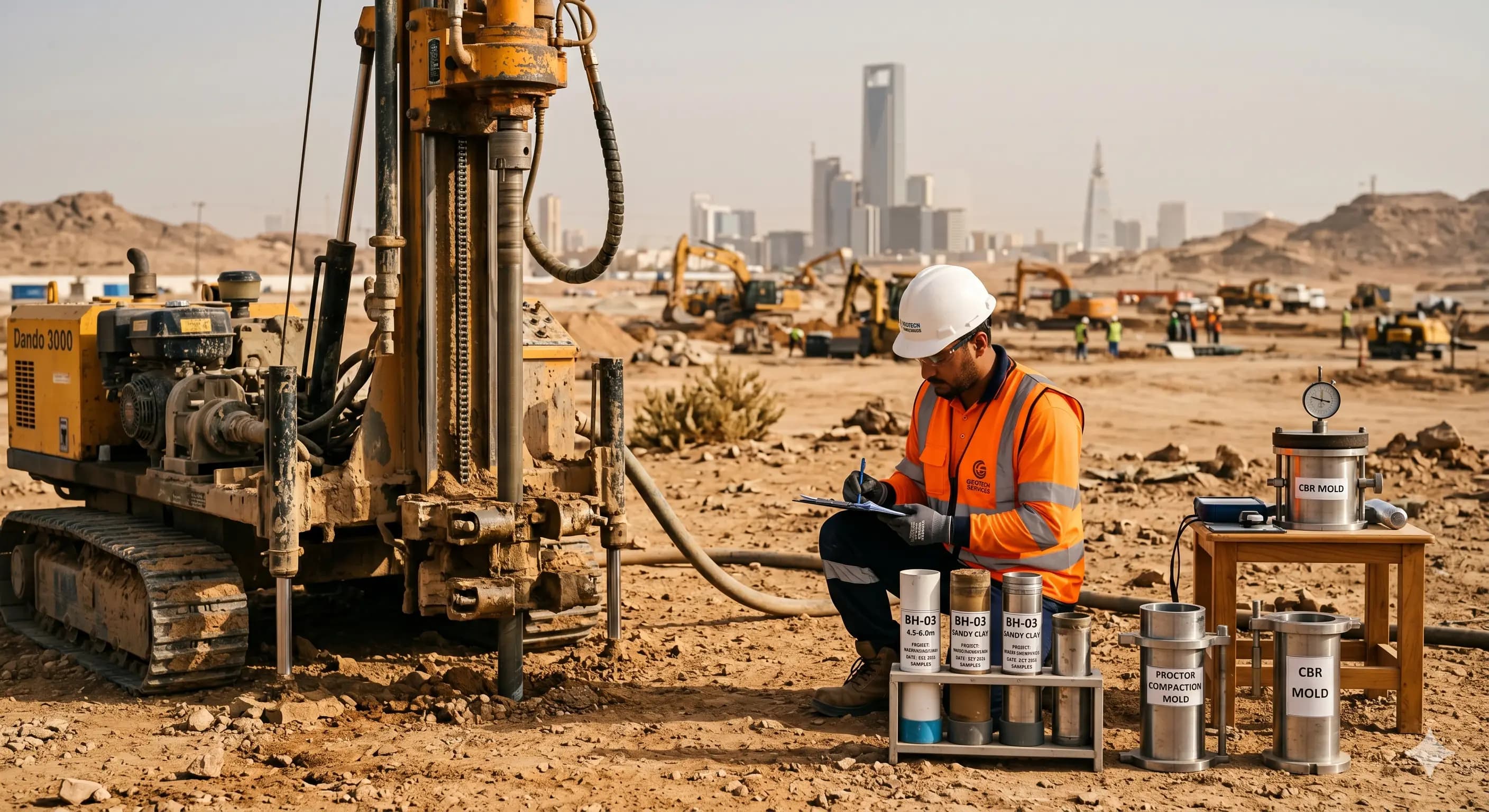
A soil testing laboratory covering pre-construction boreholes, in-situ testing, sampling, laboratory analysis, and geotechnical reporting according to each project's scope.

Concrete
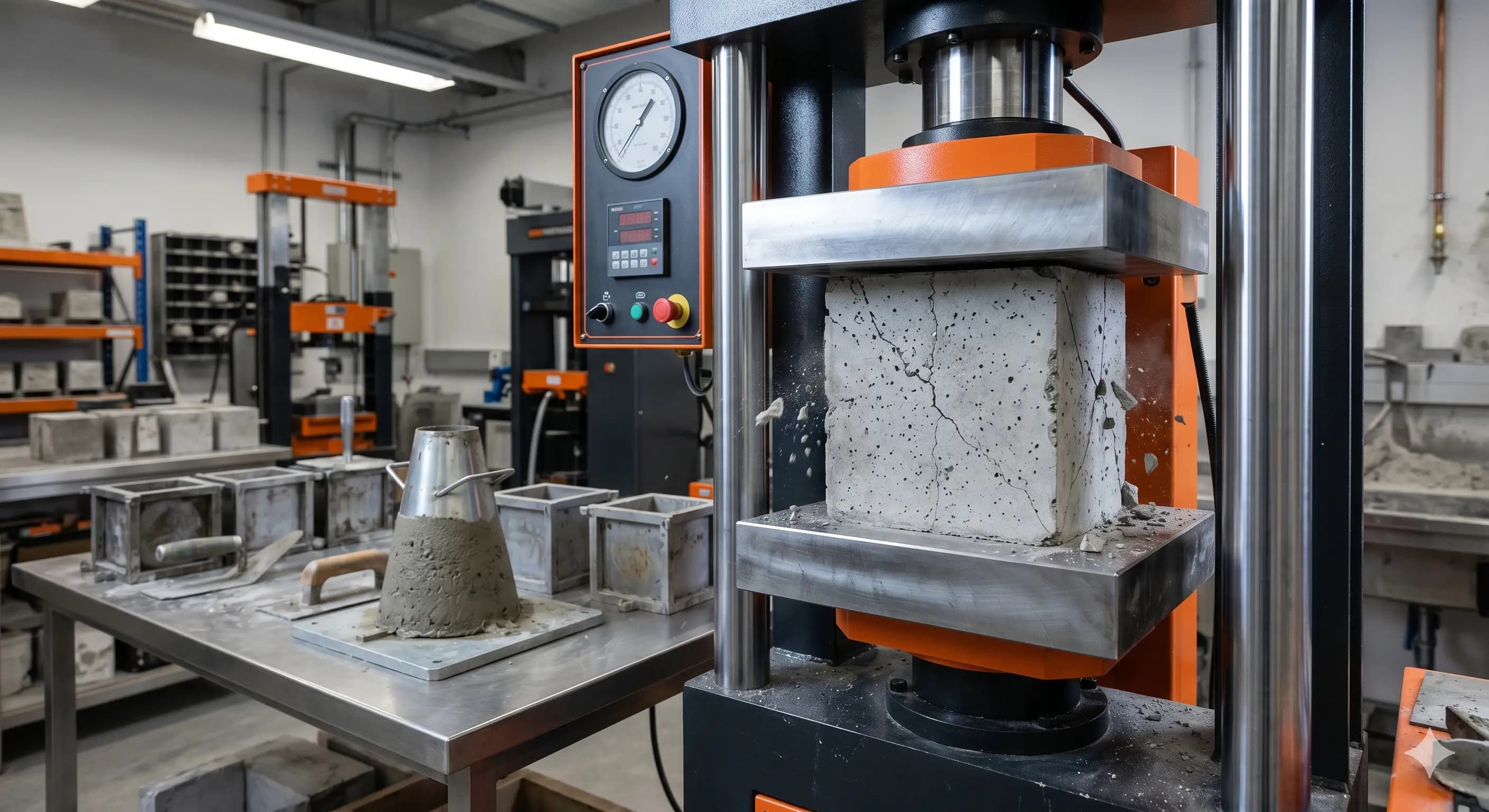
Fresh and hardened concrete testing covering slump, temperature, specimens, compressive strength, concrete cores, and non-destructive methods to project specifications.

Asphalt
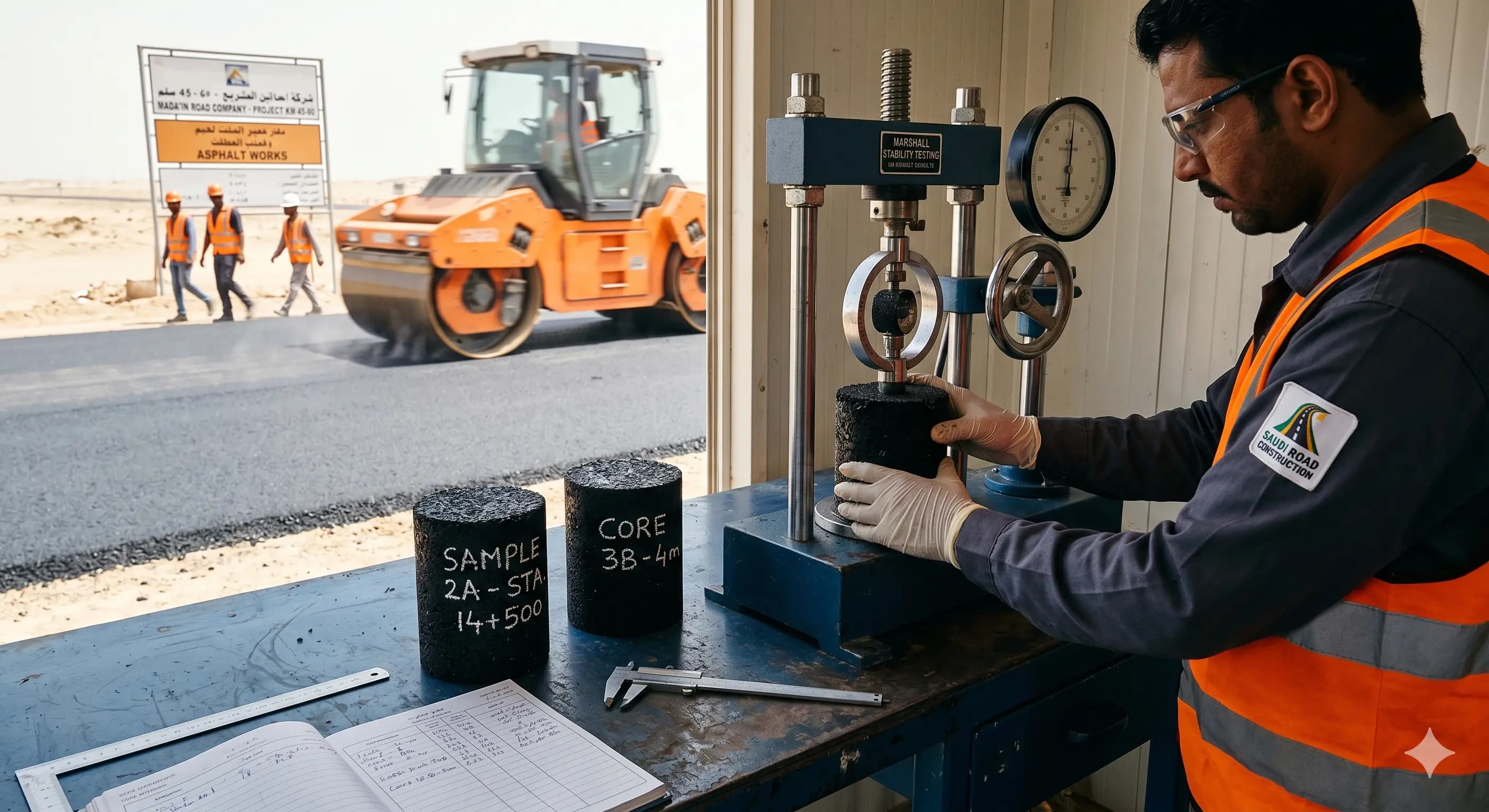
Asphalt mixture and pavement testing covering Marshall, binder content, gradation, Gmm, cores, thickness, density, and compaction to project specifications.

Aggregate
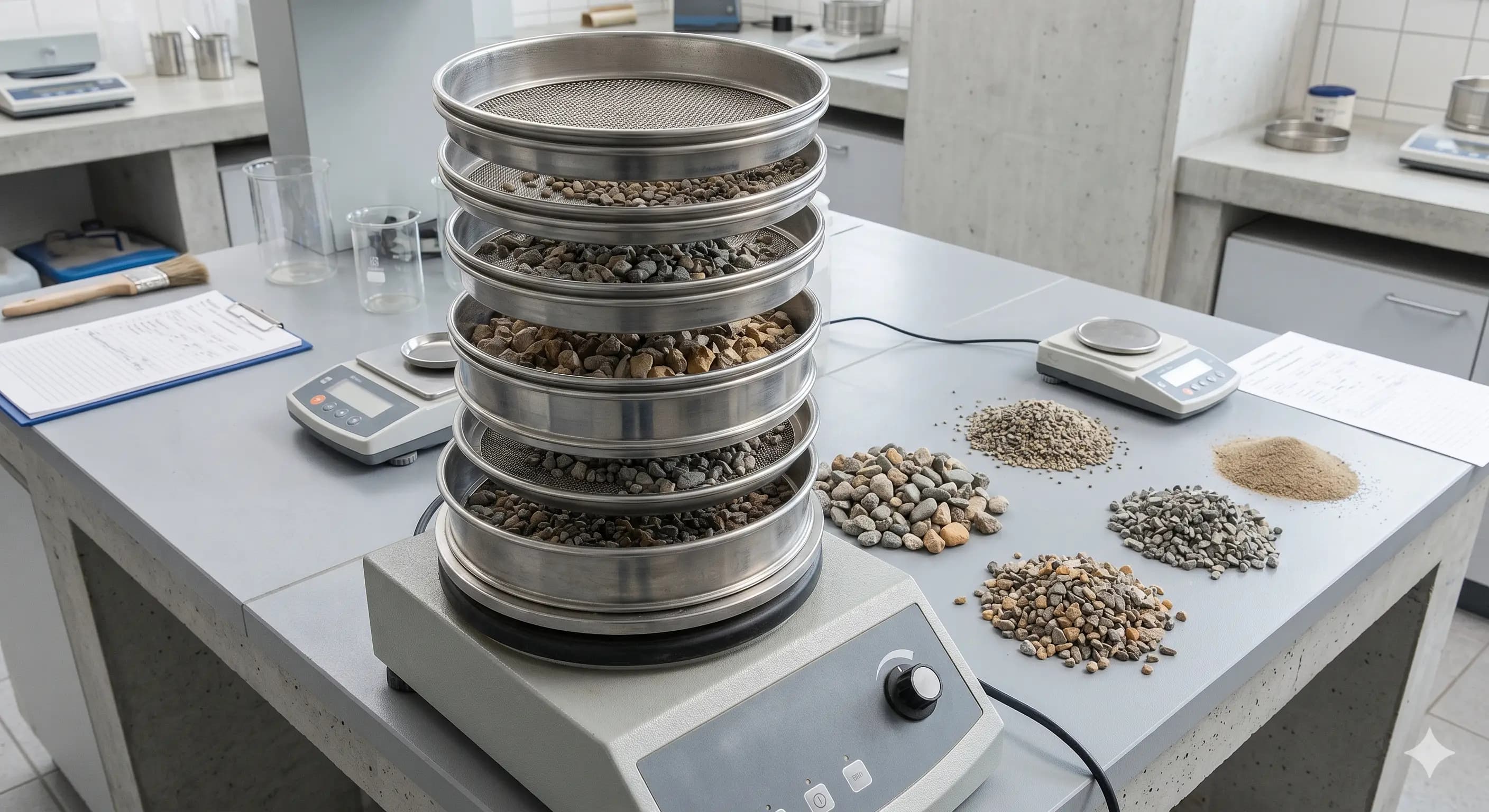
Fine and coarse aggregate testing for gradation, relative density, absorption, bulk density, abrasion, and soundness by intended use and project specification.

Rebar
Rebar batch testing covering yield, tensile strength, elongation, bend, mass per metre, and chemical composition under the specified grade and project standard.

Chemical
Chemical analysis of water, soil, and aggregate covering pH, sulfates, chlorides, and TDS — to determine environmental aggressiveness on construction materials.
Our specialized team is ready to mobilize to your site anywhere in the Kingdom.
Madinah's rapidly expanding hotel and residential districts serving Hajj and Umrah visitors require verified building material quality. TECHNO Soil Lab tests per SASO GSO 68: compressive strength, water absorption, and dimensional tolerance. For projects near the Prophet's Mosque, we additionally verify compliance with Madinah Municipality architectural requirements for light-colored finishes. Certified reports issued within 7 working days.