Laboratory Service

Concrete Testing Laboratory: Site & Lab Tests

Fresh and hardened concrete testing covering slump, temperature, specimens, compressive strength, concrete cores, and non-destructive methods to project specifications.

Concrete Testing Laboratory: Site & Lab Tests

In Short

A concrete testing laboratory evaluates fresh concrete on site and hardened concrete in the laboratory or an existing structure. The scope can include sampling, slump and temperature, compressive strength, concrete cores, and non-destructive tests. Test frequency, specimen quantity, ages, and acceptance criteria follow the project specification and approved inspection plan.

Concrete Testing Laboratory for Site and Lab Work

Concrete testing does not begin at specimen crushing. A useful result depends on representative sampling, recording the pour and element location, preparing and curing specimens, and applying the specified test method. We connect field records, specimen identification, and laboratory results in one traceable workflow.

The service supports pour monitoring, compressive-strength verification, and post-pour investigation when a result needs review or an existing structure is being assessed. The laboratory does not independently accept or reject a structural element; results are compared with the design requirement and project specification for the engineer or consultant to evaluate.

Link each specimen to its pour date, element, and sampling location
Clearly separate field observations from specimen or core strength results
Flag results that need review against the stated project requirement
Add durability or non-destructive tests when the project scope requires them

Fresh and Hardened Concrete Testing Scope

We define the test matrix from the project specification and concrete condition instead of applying one package to every project.

On Site During the Pour

Fresh-concrete checks and specimen records before laboratory transfer.

Sampling according to the inspection plan or project instruction
Concrete slump and temperature testing
Air content or unit weight when requested
Recording the pour, element, truck, and sampling time

In the Lab or Existing Structure

Hardened-specimen tests or post-pour investigation for the defined purpose.

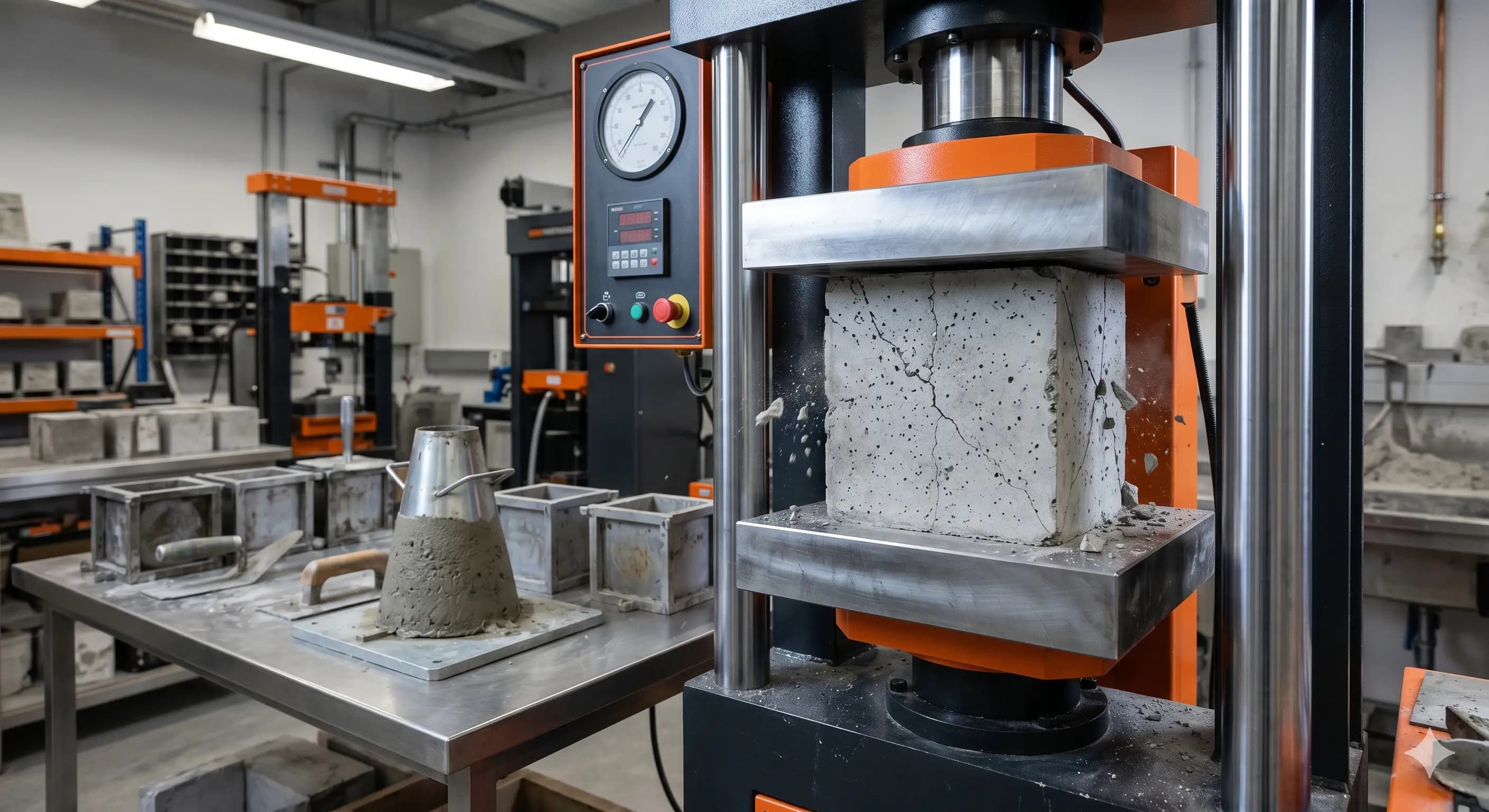
Compressive-strength testing at project-specified ages
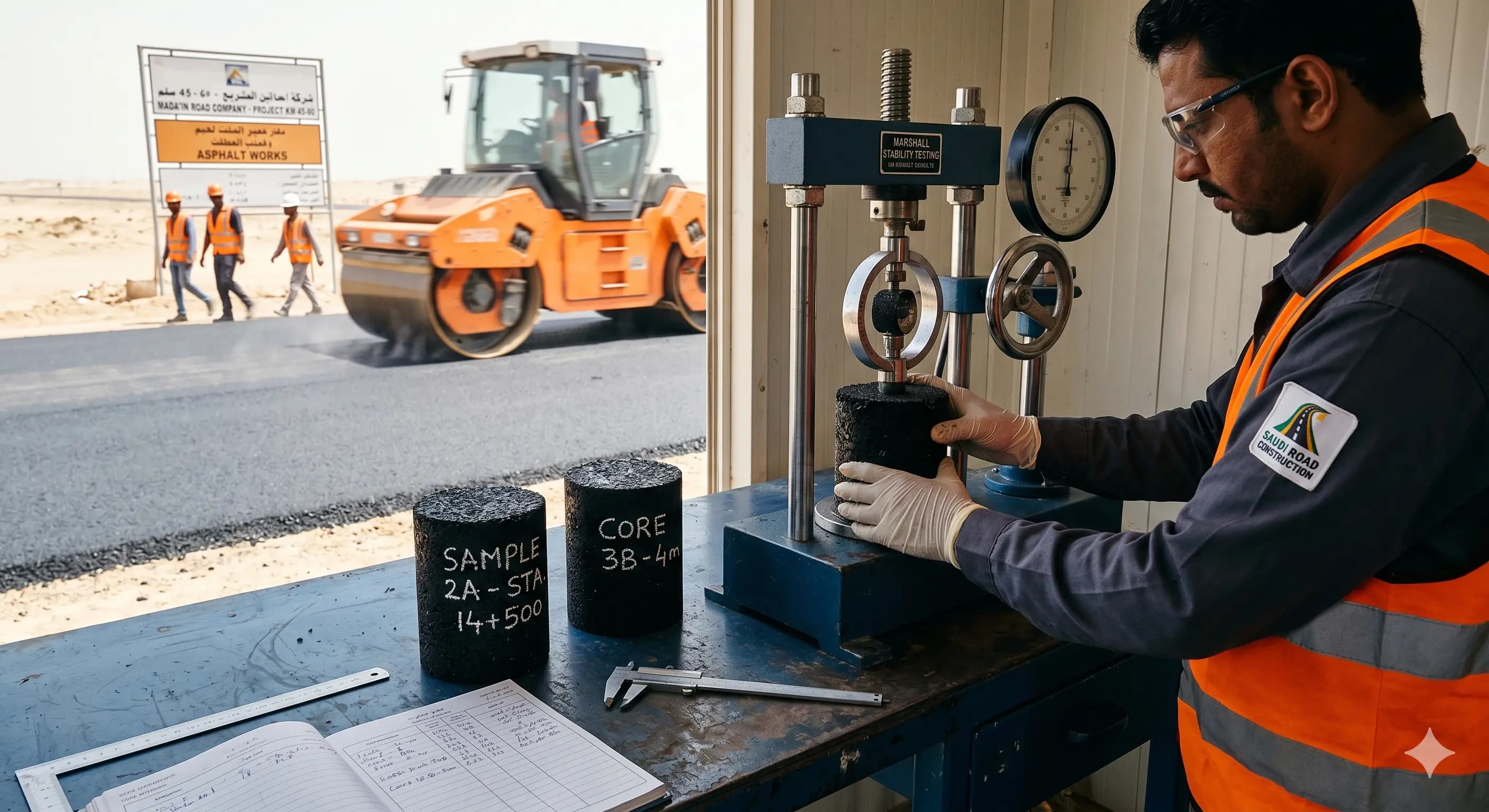
Concrete core sampling and testing when approved in the investigation plan
Schmidt hammer and ultrasonic pulse velocity as non-destructive tests
Permeability, absorption, and chloride tests where included in scope

Common Concrete Testing Standards

The governing method, sampling frequency, and acceptance criteria come from the approved project documents.

ASTM C31/C31M

Making and curing concrete test specimens in the field

ASTM C143/C143M

Slump testing of fresh concrete

ASTM C39/C39M

Compressive strength of cylindrical concrete specimens

ASTM C42/C42M

Obtaining and testing drilled cores from existing structures

ASTM C805/C805M

Rebound number of hardened concrete using a Schmidt hammer

ASTM C597

Ultrasonic pulse velocity through concrete

ASTM C1202

Electrical indication of resistance to chloride ion penetration

How We Coordinate Concrete Pour Testing

The schedule, visit count, and specimen matrix are confirmed in the scope before work starts.

1

1. Review Pour Requirements

We collect the site, pour window, structural element, design requirement, and inspection plan or consultant instruction.

2

2. Field Testing

The technician performs the agreed field tests, takes specimens, and records the pour and sampling details.

3

3. Transfer, Curing, and Testing

Specimens are transferred, cured, and tested at the specified ages while each specimen set remains identifiable.

4

4. Issue Results

The report presents specimen data, test method, results, and the recorded requirement, highlighting results that need technical review.

Questions Before Choosing a Concrete Testing Lab

Agree on these points before the pour to avoid mismatched expectations after sampling.

1Which tests are required for each pour, and what is the sampling frequency?
2Who defines specimen quantity and compressive-test ages?
3How is each specimen identified and linked to the element and pour location?
4How and when are results requiring review communicated?
5Are concrete cores or non-destructive tests included or quoted separately?

Information Needed for a Concrete Testing Quote

Send the pour details and required scope so the quotation matches the project instead of relying on an inaccurate generic price.

Send These Details

City, project location, and site-access details
Pour date, expected window, and structural element
Design strength or mix grade and governing specification
Expected volume, mixer count, or pour duration
Required tests, specimen count, and test ages
Inspection plan and site or consultant contact

What Affects the Price?

1Travel distance, visit count, and time required on site
2Number of specimen sets and tests required per set
3Test ages and curing or storage requirements
4Additional core, durability, or non-destructive testing
5Report format, copy count, and any agreed delivery schedule
Send Project Details on WhatsApp

Included Tests

12 field and laboratory tests available by project scope

Pour supervision + temp/slump + cube sampling (7 & 28 day)

الإشراف على صب الخرسانة + هبوط + عينات مكعبات (7 و28 يوم)

ASTM C143 / C31

Unit: sample

Air Content

محتوى الهواء

ASTM C231

Unit: test

Unit Weight

وزن الوحدة

ASTM C138

Unit: test

Initial & Final Setting Time

زمن الشك الابتدائي والنهائي

ASTM C191

Unit: test

Thermo Couple Test (mass concrete)

درجة حرارة الخرسانة الكتلية

ASTM C1064

Unit: test

Bleeding of Fresh Concrete

نسبة النضح

ASTM C232

Unit: test

Concrete Core Samples (with report)

كور خرساني (مع تقرير)

ASTM C42

Unit: sample

Ferro Scan (rebar detection)

الكشف عن حديد التسليح (Ferro Scan)

Unit: point

Schmidt Rebound Hammer

مطرقة الارتداد شميدت

ASTM C805

Unit: point

Ultrasonic Pulse Velocity (UPVT)

الموجات فوق الصوتية (UPVT)

ASTM C597

Unit: test

Half Cell Potential (corrosion)

نسبة الصدأ في حديد التسليح

ASTM C876

Unit: test

Concrete Durability Package (5 tests)

حزمة ديمومة الخرسانة (5 اختبارات)

BS 1881 / BS EN 12390-8 / ASTM C1202

Unit: sample

Why Choose Us

Why TECHNO Soil Lab?

12
Available Tests

Field and laboratory tests selected to match the project scope

15+
Years Experience

Accumulated technical experience in testing & engineering consultancy

5
Cities Served

From our Makkah head office, via equipped field teams

What a Concrete Test Report Contains

Final report content depends on the test method and information supplied with the work order.

Project details, pour date, and element or sampling location
Specimen or core identification and receipt and test dates
Test method and applied standard
Slump, temperature, or compressive-strength results as scoped
Dimensions, condition, and observations relevant to the specimen type
The requirement supplied to the lab and a flag for results needing review

Projects Where We Ran This Service

Related Reading

Common Questions

FAQ About Concrete Testing Laboratory: Site & Lab Tests

Fresh-concrete tests are performed around the pour, including slump, temperature, air content, and sampling. Hardened-concrete tests include compressive strength, drilled cores, non-destructive methods, and durability tests. The project scope defines the required methods, frequency, and evaluation criteria.

Need Concrete Testing Laboratory: Site & Lab Tests Services?

Our specialized team is ready to mobilize to your site anywhere in the Kingdom.

Concrete Testing in Jeddah — Protection from Coastal Aggressive Environment

Jeddah ranks among Saudi Arabia's most aggressive environments for concrete. The salt-laden coastal air combined with shallow chloride-rich groundwater accelerates rebar corrosion far beyond rates seen in Riyadh or Qassim. Key deterioration mechanisms: chloride ingress from sea air and groundwater, sulfate attack on ordinary Portland cement, and thermal expansion cycles.

TECHNO Soil Lab provides Rapid Chloride Permeability Testing (RCPT per ASTM C1202), core extraction from existing structures, and half-cell potential surveys on suspect structures. We recommend GGBS or pozzolanic cement to reduce permeability and address sulfates, with 50-60 mm concrete cover in marine spray zones.