Laboratory Service

Block and Interlock Testing Laboratory

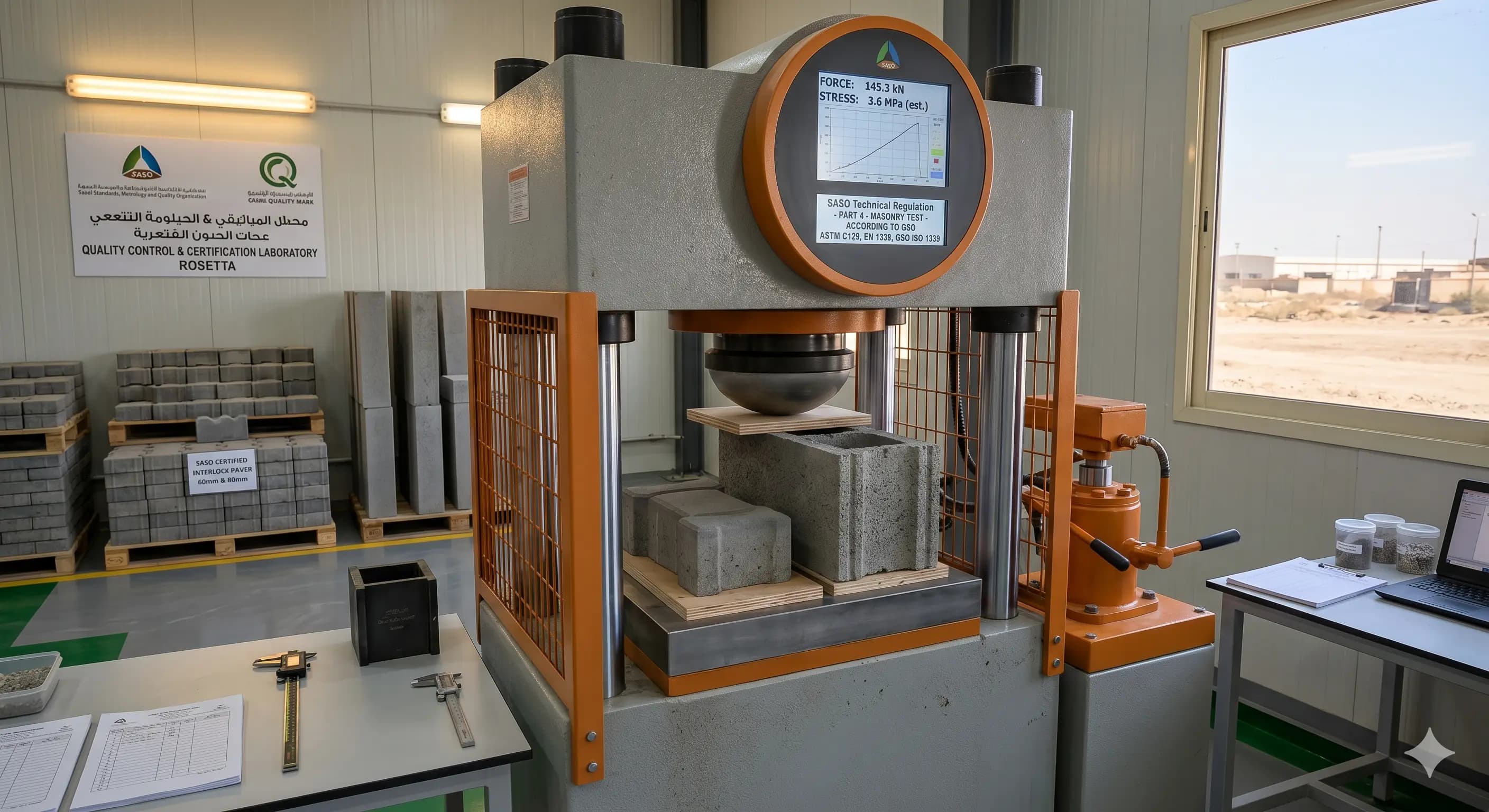
Testing for cement blocks, interlock pavers, and curbstones covering dimensions, compressive strength, water absorption, and density by product specification.

Block and Interlock Testing Laboratory

In Short

Block, interlock-paver, and curbstone testing measures properties of submitted product samples, such as dimensions, compressive strength, water absorption, and density where requested. The service starts by identifying the unit, intended use, governing specification, and sampling plan; results are then compared with the project-supplied limits rather than one value for every product.

Blocks, Interlock Pavers and Curbstones Laboratory Testing

Block products differ by material, configuration, and use: solid or hollow, load-bearing or non-load-bearing, insulating or lightweight, plus paving units and curbstones. A request saying only “block” is incomplete. Product type, size, intended use, batch, and specification are needed for the correct test and comparison.

Testing a delivered batch provides evidence about the tested samples. Result reliability begins with a sampling plan representing the batch, protected transport, and clear specimen identification. The laboratory records results against supplied requirements; acceptance of the entire delivery follows the quality plan, contract, and authorized project decision.

Record product type, batch, size, and intended use
Measure cement-block dimensions instead of relying on nominal size
Link strength, absorption, and density to the correct sample and standard
Flag deviations needing review before the full batch is installed

Cement Block and Interlock Paver Testing Scope

Unit type and intended use define the test; blocks, pavers, and curbstones are not treated as one product.

Concrete and Cement Blocks

Testing solid or hollow units under the project classification.

Actual dimensions and relevant wall or web thicknesses
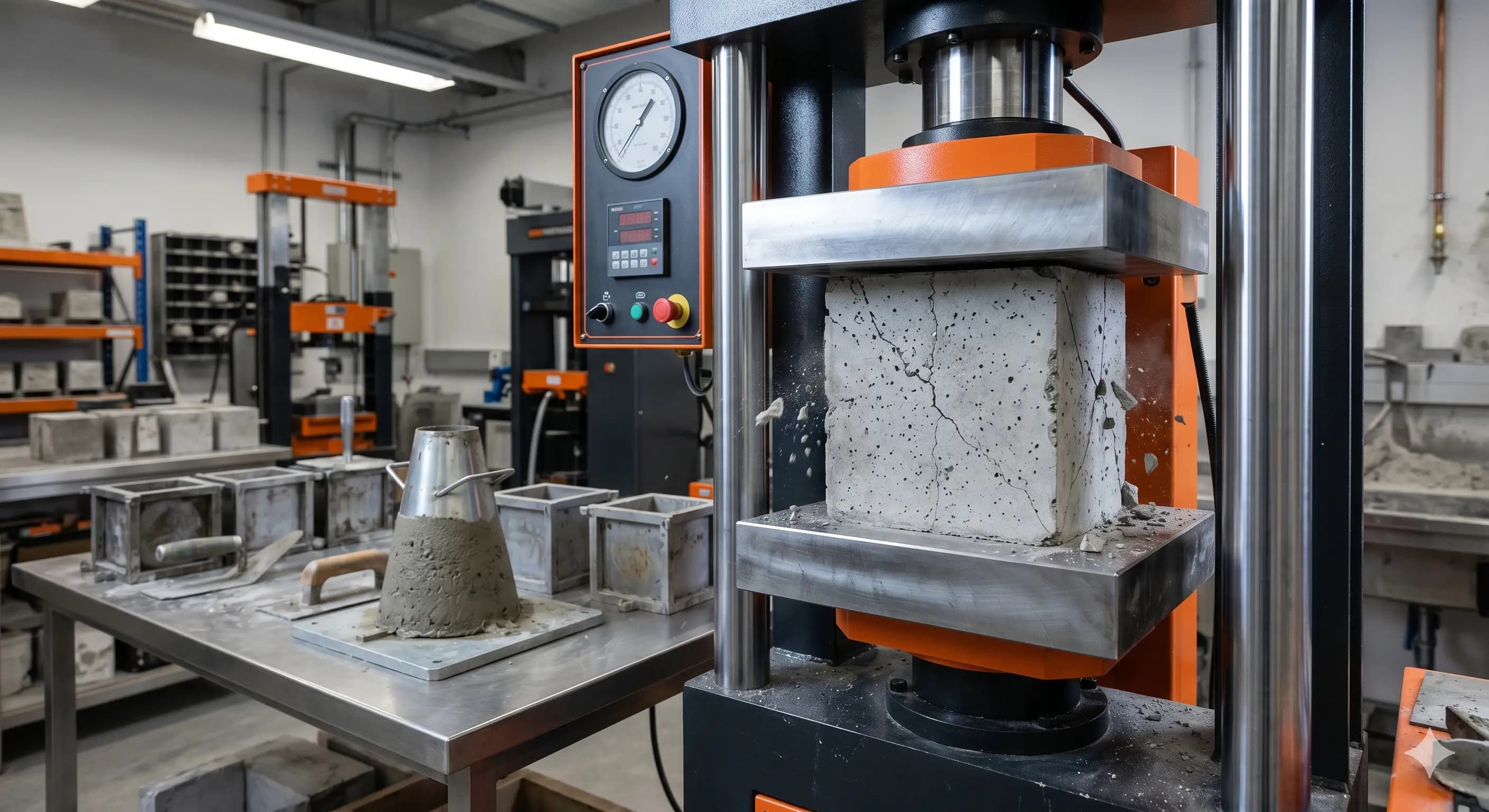
Compressive strength with bearing area and calculation method recorded
Water absorption and density or mass where included
Comparison with the stated unit classification and intended use
Interlock Pavers and Curbstones

Tests for paving or edging units according to product form and specification.

Length, width, thickness, and required dimensional tolerances
Compressive, flexural, or splitting strength as specified
Water absorption and density where requested
Use-face, color, or shape identification where visual checks are scoped

Common References for Masonry and Paving Units

The required standard and edition are confirmed in the work order before comparison or conformity evaluation.

ASTM C140/C140M

Sampling, dimensions, compression, absorption, and density for specified concrete units

ASTM C90

Specification for load-bearing concrete masonry units where adopted

ASTM C129

Specification for non-load-bearing concrete masonry units where adopted

ASTM C936/C936M

Specification for solid concrete interlocking paving units

Project / SASO specification

Product limits, classification, and tolerances stated in the contract or named Saudi specification

From Batch Identification to Block and Paver Results

A usable result needs representative samples and a defined request, not unidentified units.

1

1. Define Product and Requirement

We collect product type, use, nominal size, manufacturer or batch data, standard, and acceptance limits.

2

2. Sample and Identify

Samples are selected under the project plan or received with source, quantity, condition, and visible damage recorded.

3

3. Measure and Test

Dimensions and specified strength or absorption tests are performed, recording specimen preparation and result calculations.

4

4. Report and Compare

The report lists each specimen result and the project-supplied requirement, flagging deviations for authorized review.

Questions Before Ordering Block and Interlock Tests

Confirm product identity and batch representation before sending specimens.

1Was the sample selected from the actual batch delivered to site?
2What block type, intended use, and project classification apply?
3Which nominal dimensions and tolerances should be checked?
4Is strength calculated on gross or net area under the governing method?
5Is the deliverable results only or evaluation against supplied limits?

Information Needed for a Block and Paver Testing Quote

Send each product's details as a separate sample to avoid an incorrect scope or quotation.

Send These Details

Product type: block, interlock paver, or curbstone and its material
Intended use, classification, and nominal dimensions
Manufacturer and batch or delivery date where available
Required standard, edition, and acceptance limits
Specimen quantity and tests required for each product
Whether the laboratory samples the batch or receives client-selected units

What Affects the Price?

1Number of products, batches, and sizes
2Specimen quantity, preparation, and required bearing-area calculation
3Dimensions, compression, absorption, and density package
4Sampling visit, location, and travel distance
5Report, comparison format, and agreed delivery schedule
Send Project Details on WhatsApp

Included Tests

6 field and laboratory tests available by project scope

Compressive Strength

مقاومة إجهاد الكسر

ASTM C140

Unit: sample

Water Absorption

نسبة الامتصاص

ASTM C140

Unit: sample

Dimensions

الأبعاد

Unit: sample

Fire Resistance (blocks)

مقاومة الحريق (بلوك)

Unit: sample

Flexural Strength (where required by product standard)

مقاومة الانحناء (عند طلبها حسب مواصفة المنتج)

Unit: sample

Splitting Tensile Strength (where required)

مقاومة الشد الانشطاري (عند طلبها)

Unit: test

Why Choose Us

Why TECHNO Soil Lab?

6
Available Tests

Field and laboratory tests selected to match the project scope

15+
Years Experience

Accumulated technical experience in testing & engineering consultancy

5
Cities Served

From our Makkah head office, via equipped field teams

What a Block and Interlock Test Report Contains

The report reflects submitted samples and requested tests; it does not automatically extend to all factory production.

Client, project, product, and available manufacturer or batch data
Specimen quantity, condition, and sampling method when laboratory-selected
Actual dimensions, individual values, and applicable averages
Compression, absorption, density, or other specified test results
Standard, calculation method, and relevant bearing area
Comparison with supplied limits and flags for results needing review
Common Questions

FAQ About Block and Interlock Testing Laboratory

The package may include dimensions and wall thickness, compressive strength, water absorption, density or mass, and other product-specific checks. Send the block type, classification, intended use, and required standard because calculations and comparison limits differ between load-bearing, non-load-bearing, solid, and hollow units.

Need Block and Interlock Testing Laboratory Services?

Our specialized team is ready to mobilize to your site anywhere in the Kingdom.

Blocks and Interlock Testing in Riyadh — Building Materials for Vision 2030

Riyadh is Saudi Arabia's largest masonry unit market, driven by massive residential and commercial construction. Common quality defects found by TECHNO Soil Lab: water absorption above 10% from insufficient cement, compressive strength below 7 MPa from inadequate curing, and dimensional variation exceeding 3 mm from worn molds. We offer weekly QC programs for manufacturers (production sampling, consistency monitoring, mix design feedback) and incoming batch inspection for contractors before site use. Reports per SASO GSO 68.