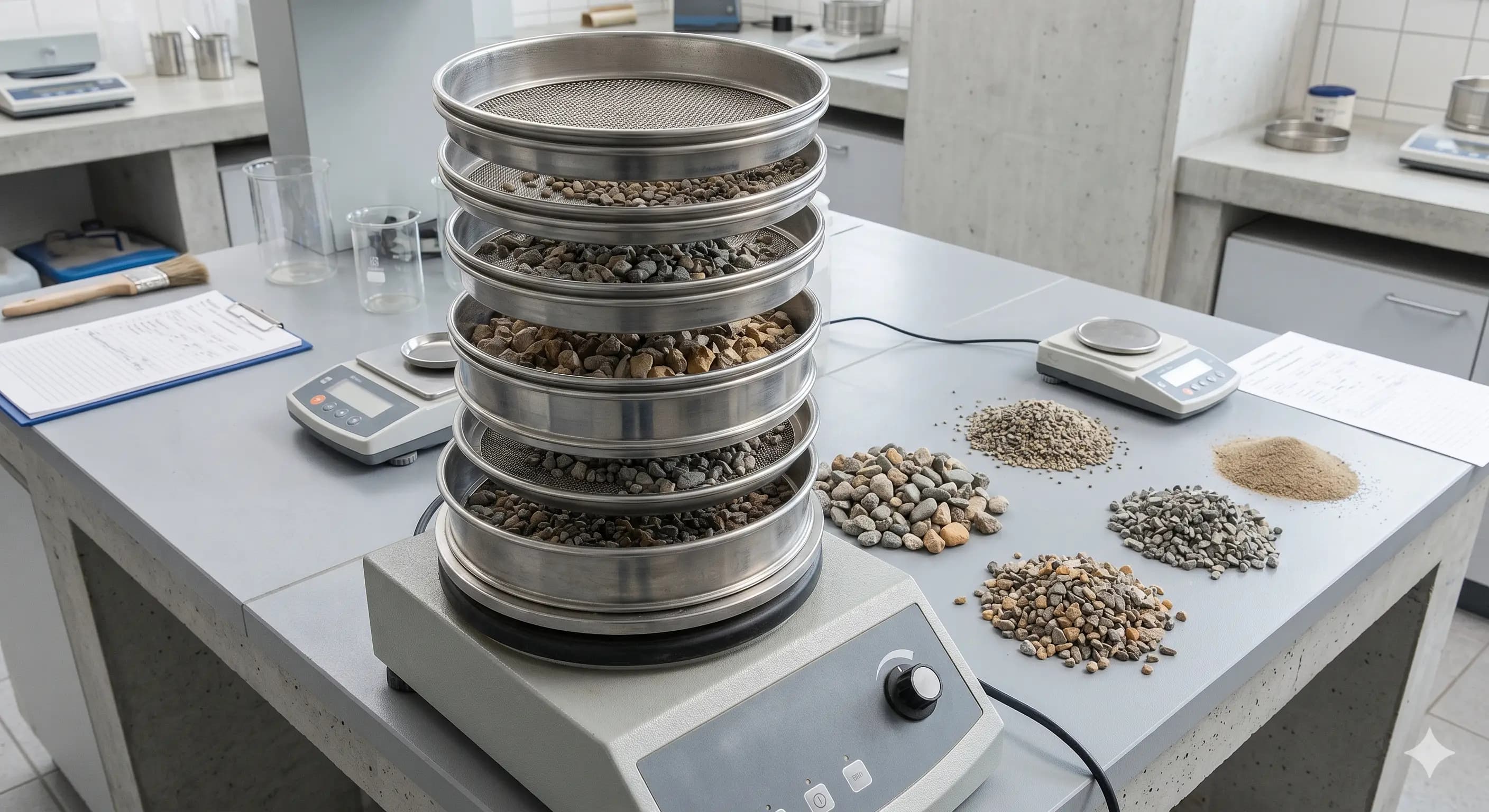
Gradation and Physical Properties
Tests describing size distribution, mass, volume, and water absorption.
Fine and coarse aggregate testing for gradation, relative density, absorption, bulk density, abrasion, and soundness by intended use and project specification.

In Short
Aggregate testing evaluates a representative fine- or coarse-aggregate sample for its intended concrete, asphalt, or road-layer use. Scope can include gradation, fines, relative density and absorption, bulk density, abrasion, and soundness. Results are compared with the project grading envelope and limits; one package or limit does not fit every use.
Aggregate covers materials that differ by source, size, and use. Sand is not prepared or interpreted like gravel, and concrete aggregate may have requirements different from asphalt or base-course aggregate. A test request therefore begins with source, nominal size, intended use, and required specification.
Machine precision cannot rescue an unrepresentative sample. Particles can segregate during handling, and quarry faces or supplier stockpiles can change. Sampling and reduction should follow an appropriate plan while identity remains tied to the batch. The report describes the tested sample; supplier or stockpile representation depends on how and how often it was sampled.
Tests follow the project question instead of one list being applied to every sample.
Tests describing size distribution, mass, volume, and water absorption.
Tests selected according to use, exposure, and material source.
The method, edition, and project limits are confirmed before any conformity evaluation.
Sieve analysis of fine and coarse aggregates
Material finer than the 75-μm sieve by washing
Relative density and absorption of coarse and fine aggregate
Bulk density and voids in aggregate
Abrasion and impact of small-size coarse aggregate in the Los Angeles machine
Aggregate soundness using sodium sulfate or magnesium sulfate
Clay lumps and friable particles
Petrographic examination of aggregates for concrete
Source identity and sample reduction are part of result quality.
1. Define Source and Use
We collect aggregate type, source, batch, nominal size, intended use, specification, and requested tests.
2. Sample and Reduce
A representative sample is selected and reduced to test portions while limiting segregation and preserving identity.
3. Condition and Test
The sample is conditioned under the method before the specified gradation, density, absorption, or durability tests.
4. Report and Compare
The report presents values, curve, method, and supplied use limits, highlighting items needing review.
Define what the sample represents and its comparison reference before submission.
List each source, size, and use separately so the quotation reflects the actual sample matrix.
8 field and laboratory tests available by project scope
Standard aggregate sampling
أخذ عينة من الركام
Unit: sample
Sieve Analysis
التدرج الحبيبي
Unit: sample
Los Angeles Abrasion
مقاومة التآكل — لوس أنجلوس
Unit: sample
Solar Reflectance Index (SRI)
مؤشر الانعكاس الشمسي (SRI)
Unit: sample
Clay Lumps & Friable Particles
نسبة المواد المفتتة (كتل طينية)
Unit: sample
Magnesium Sulfate Soundness
مقاومة كبريتات المغنسيوم
Unit: sample
Petrographic Classification
المكونات المعدنية (Petrographic)
Unit: sample
Specific Gravity & Absorption
الوزن النوعي ودرجة الامتصاص
Unit: sample
Field and laboratory tests selected to match the project scope
Accumulated technical experience in testing & engineering consultancy
From our Makkah head office, via equipped field teams
Final content follows the submitted sample, requested tests, and available limits.
Use the guide for detailed learning, then send sample details to request testing.
The mix or road-layer specification and quality plan define the package and frequency. Scope may include gradation, fines, relative density, absorption, bulk density, abrasion, soundness, or deleterious materials. Fine or coarse type, source, nominal size, and intended use should be identified first.
Explore the rest of our accredited engineering tests in one place

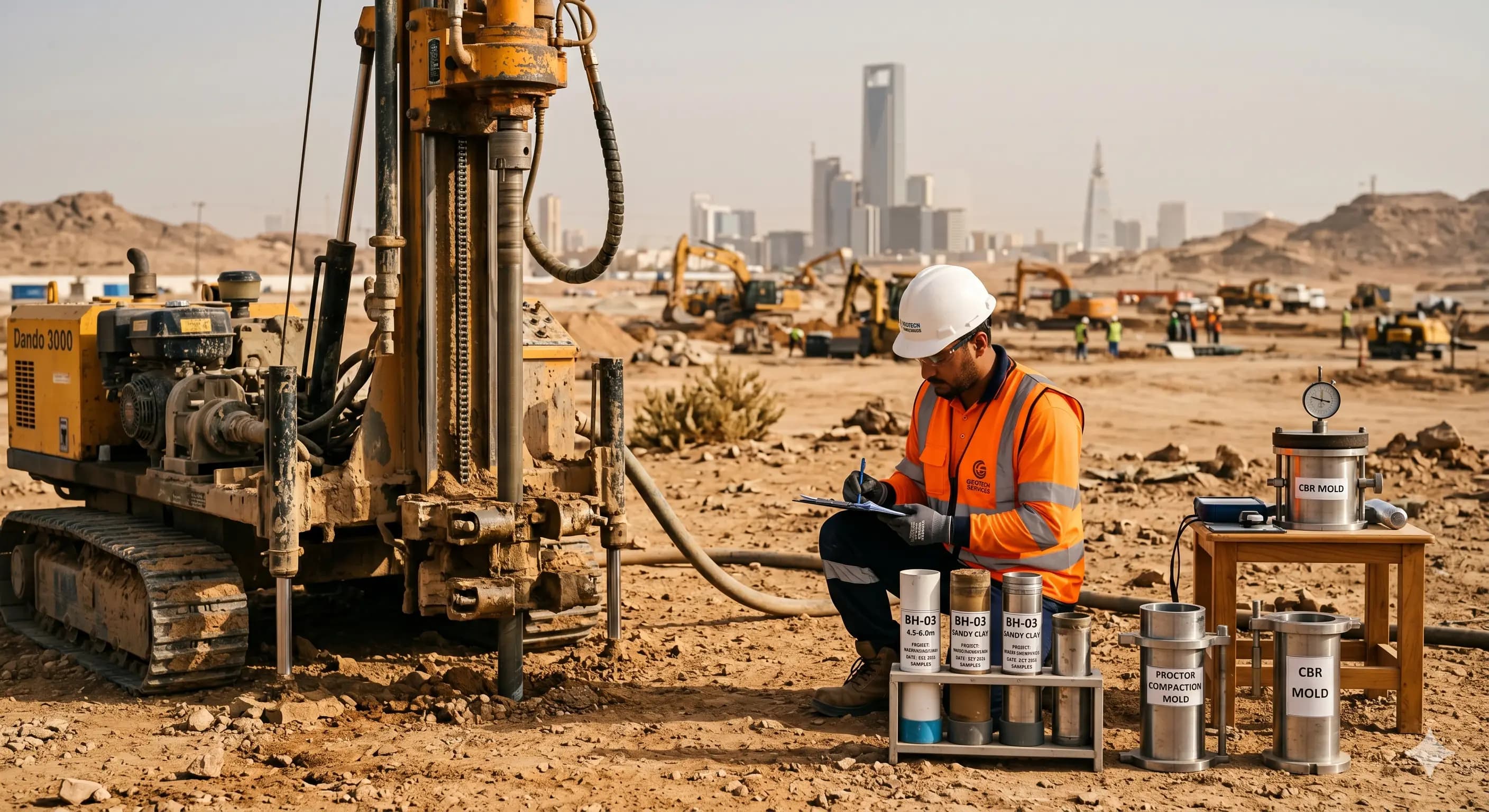
Soil
A soil testing laboratory covering pre-construction boreholes, in-situ testing, sampling, laboratory analysis, and geotechnical reporting according to each project's scope.

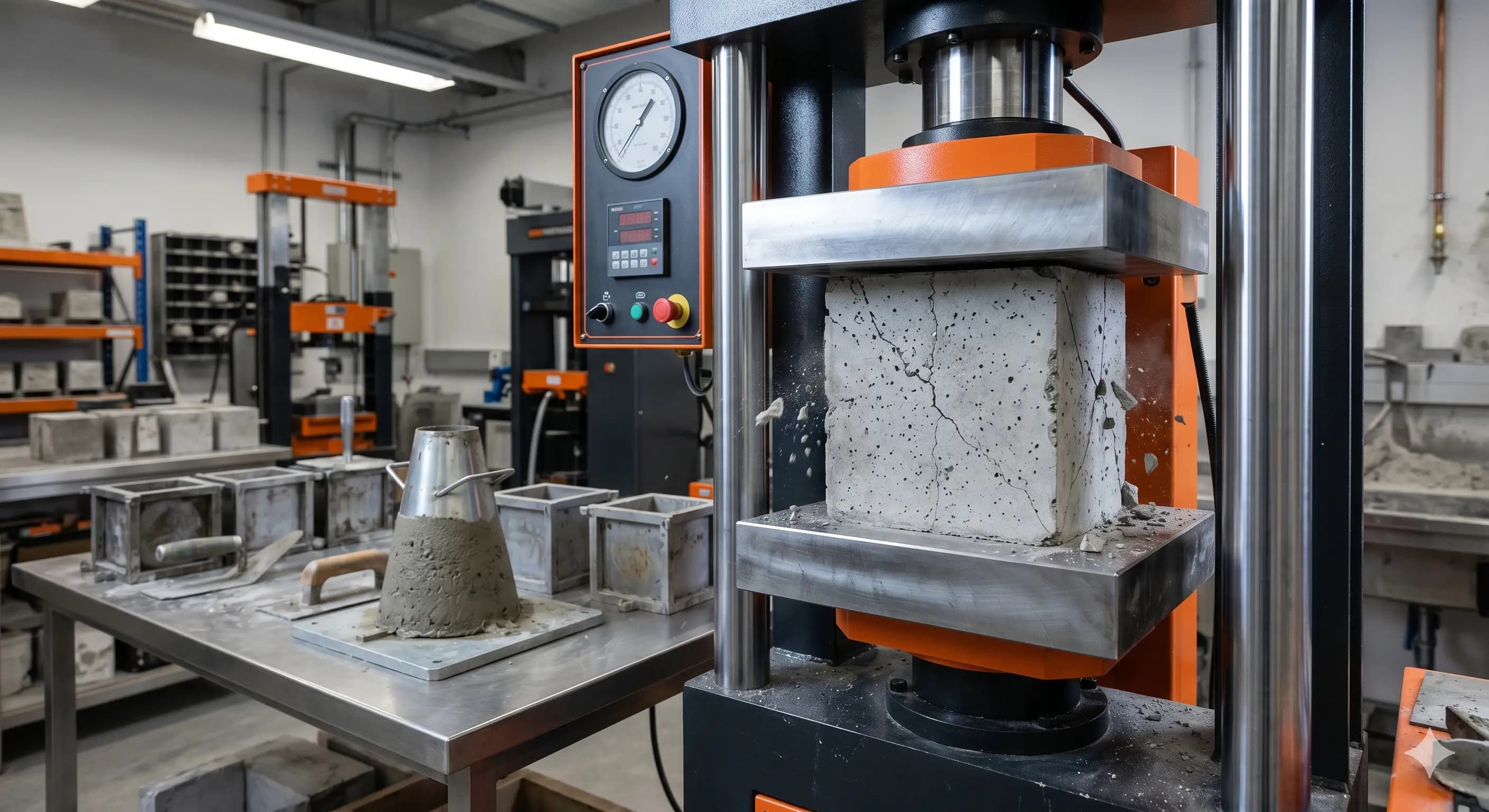
Concrete
Fresh and hardened concrete testing covering slump, temperature, specimens, compressive strength, concrete cores, and non-destructive methods to project specifications.

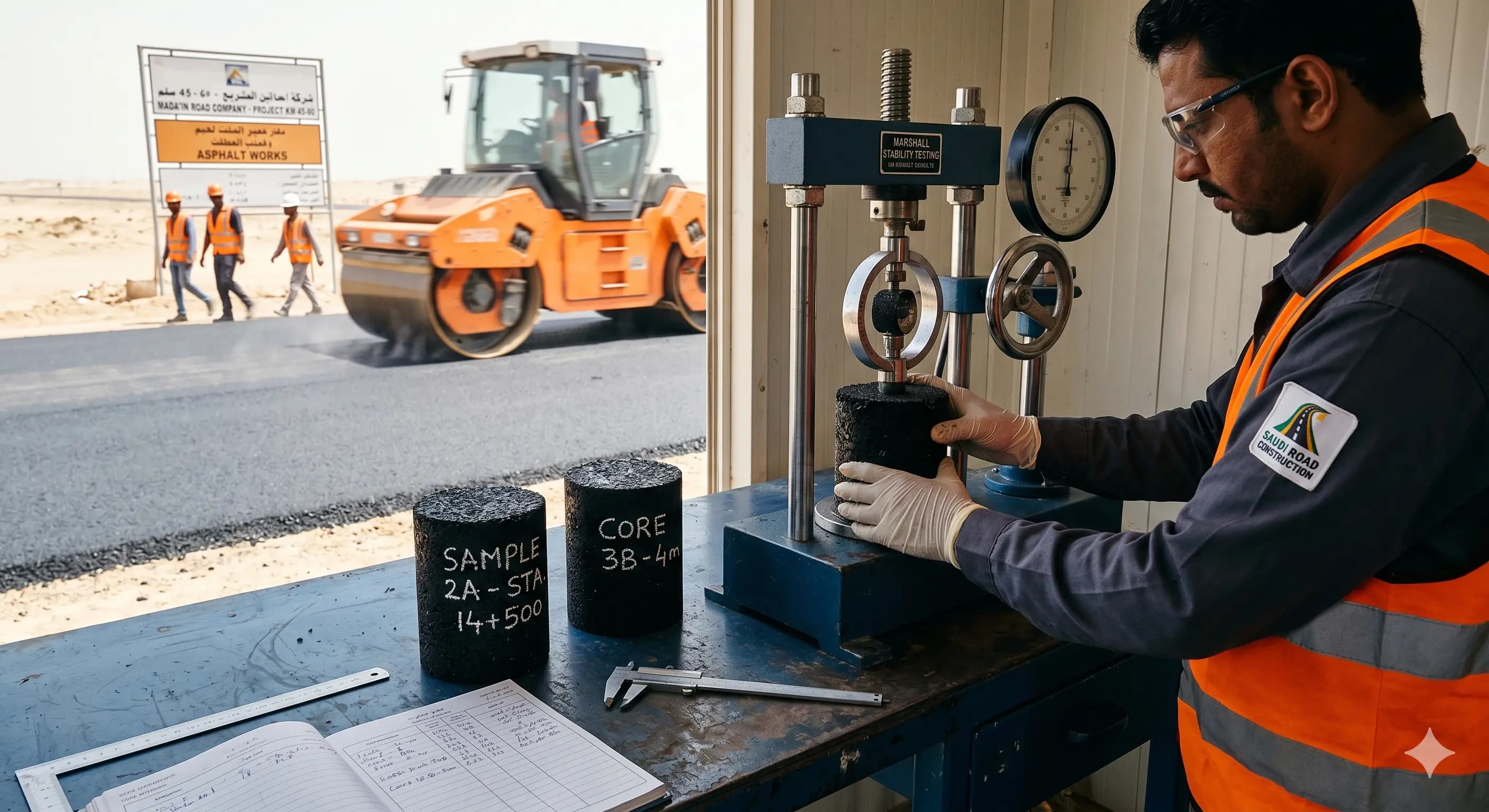
Asphalt
Asphalt mixture and pavement testing covering Marshall, binder content, gradation, Gmm, cores, thickness, density, and compaction to project specifications.

Rebar
Rebar batch testing covering yield, tensile strength, elongation, bend, mass per metre, and chemical composition under the specified grade and project standard.

Chemical
Chemical analysis of water, soil, and aggregate covering pH, sulfates, chlorides, and TDS — to determine environmental aggressiveness on construction materials.

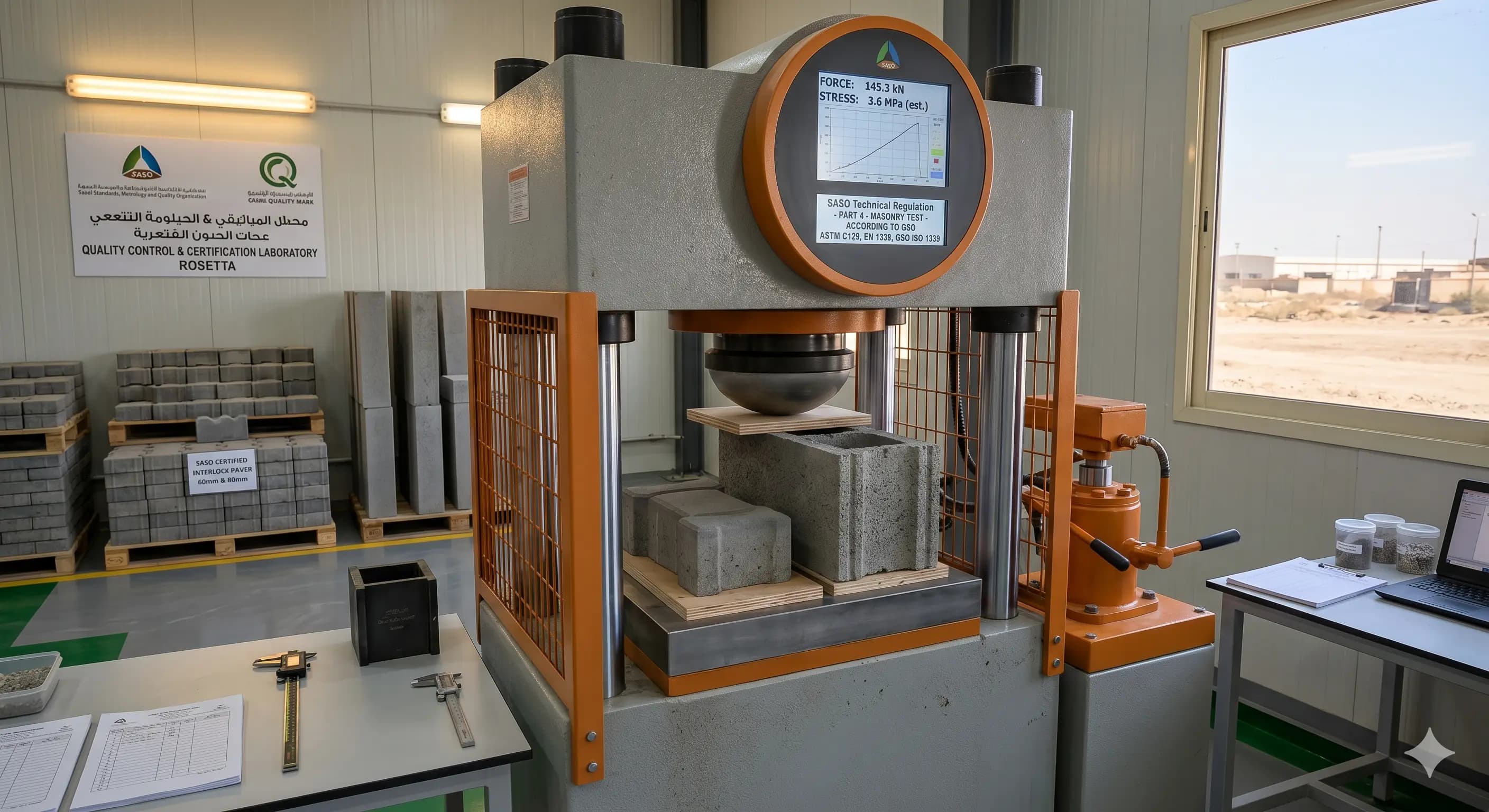
Blocks
Testing for cement blocks, interlock pavers, and curbstones covering dimensions, compressive strength, water absorption, and density by product specification.
Our specialized team is ready to mobilize to your site anywhere in the Kingdom.
Most aggregate used in Makkah projects comes from granitic quarries in surrounding mountains. Despite the granite's high hardness, varying granitic types require testing each source before use in concrete mixes or base layers.
TECHNO Soil Lab performs sieve analysis, aggregate crushing value, impact value, and chemical testing for sulfates and alkali-silica reactivity. We issue SASO GSO 1992-compliant certificates. For Grand Mosque vicinity projects, we document water absorption below 1% and flakiness index below 25% per project specifications.