Laboratory Service

Soil Testing Laboratory, Boreholes & Site Tests

A soil testing laboratory covering pre-construction boreholes, in-situ testing, sampling, laboratory analysis, and geotechnical reporting according to each project's scope.

Soil Testing Laboratory, Boreholes & Site Tests

In Short

A soil testing laboratory investigates the ground before foundation design through boreholes, field measurements, and laboratory analysis. The work starts with a site-specific investigation plan and sampling, then documents the soil profile, test results, and geotechnical recommendations the structural designer needs for the project.

What Does a Soil Testing Lab Do Before Foundation Design?

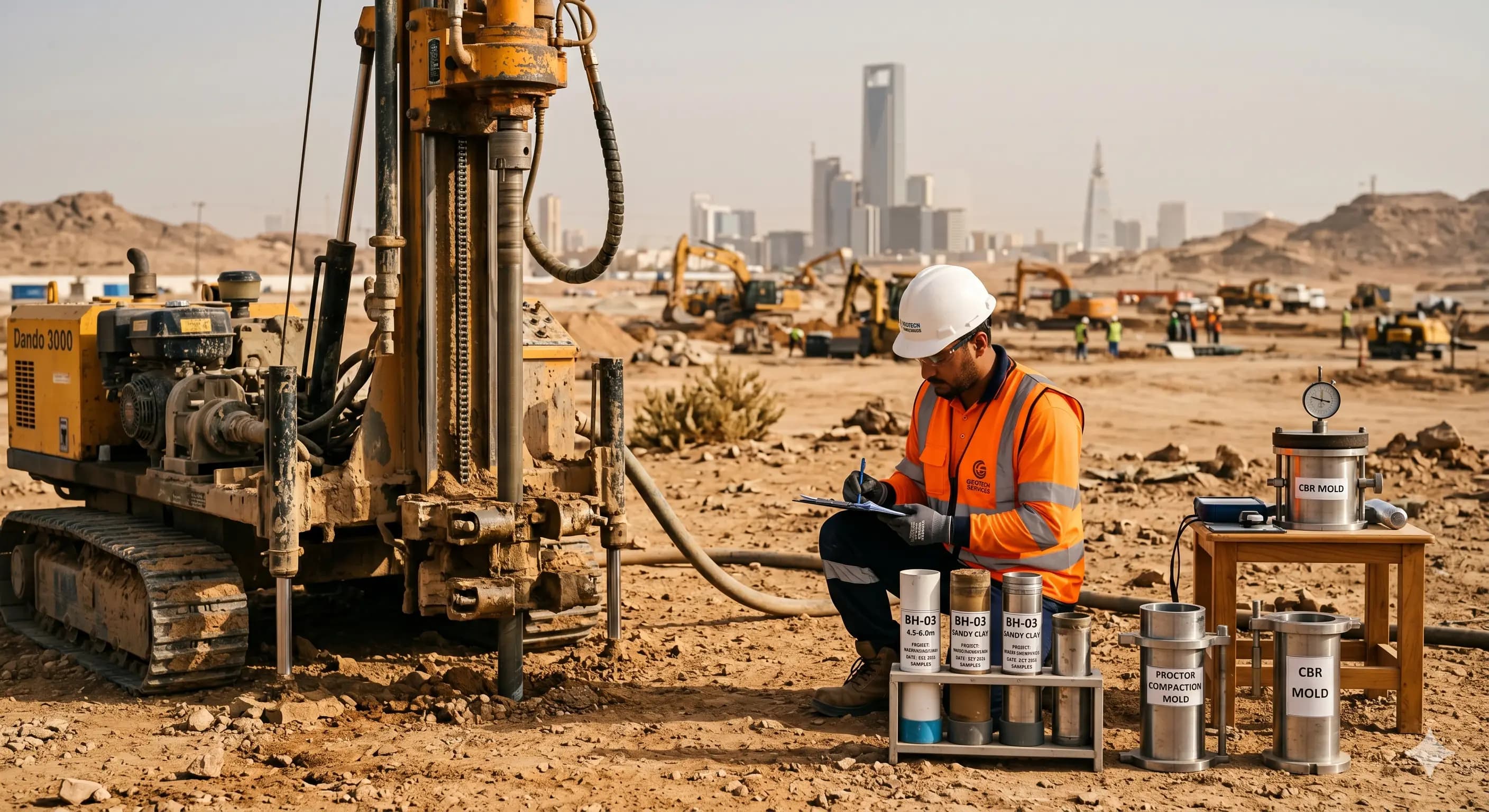
Before a single cubic meter of concrete is poured, you need to know exactly what you're building on: solid rock, loose uncompacted fill, or collapsible soil that settles when saturated. Soil testing answers that question directly — by drilling boreholes to a depth matched to the building's size, sampling every layer, and running lab analysis to establish safe bearing capacity and groundwater level.

The geotechnical report turns subsurface conditions into usable design information instead of general assumptions. TECHNO Soil Lab coordinates the work from its Ash Shara'i, Makkah head office, with field teams mobilizing to projects in Jeddah, Madinah, Riyadh, and Qassim according to project scope and scheduling.

Precise, numbers-based bearing capacity instead of rough estimates
Avoid costly redesign or reinforcement after soil issues surface mid-construction
Clear results and recommendations for the designer, consultant, and requesting authority
Early detection of collapsible or saline soil risk before committing to a structural design

In-Situ and Laboratory Soil Testing

Soil investigation is not one test. The engineer selects a program that combines site observations with sample results for the structure type and project stage.

Field Tests and Boreholes

These record in-place conditions and changes with depth before samples move to the laboratory.

Borehole drilling, soil logging, and groundwater observations when encountered
Standard Penetration Testing (SPT) within boreholes
Disturbed and undisturbed sampling as the analysis requires
Field density and plate-load testing when required by the project

Laboratory Soil Tests

The soil laboratory classifies samples and measures their engineering behavior under the selected program.

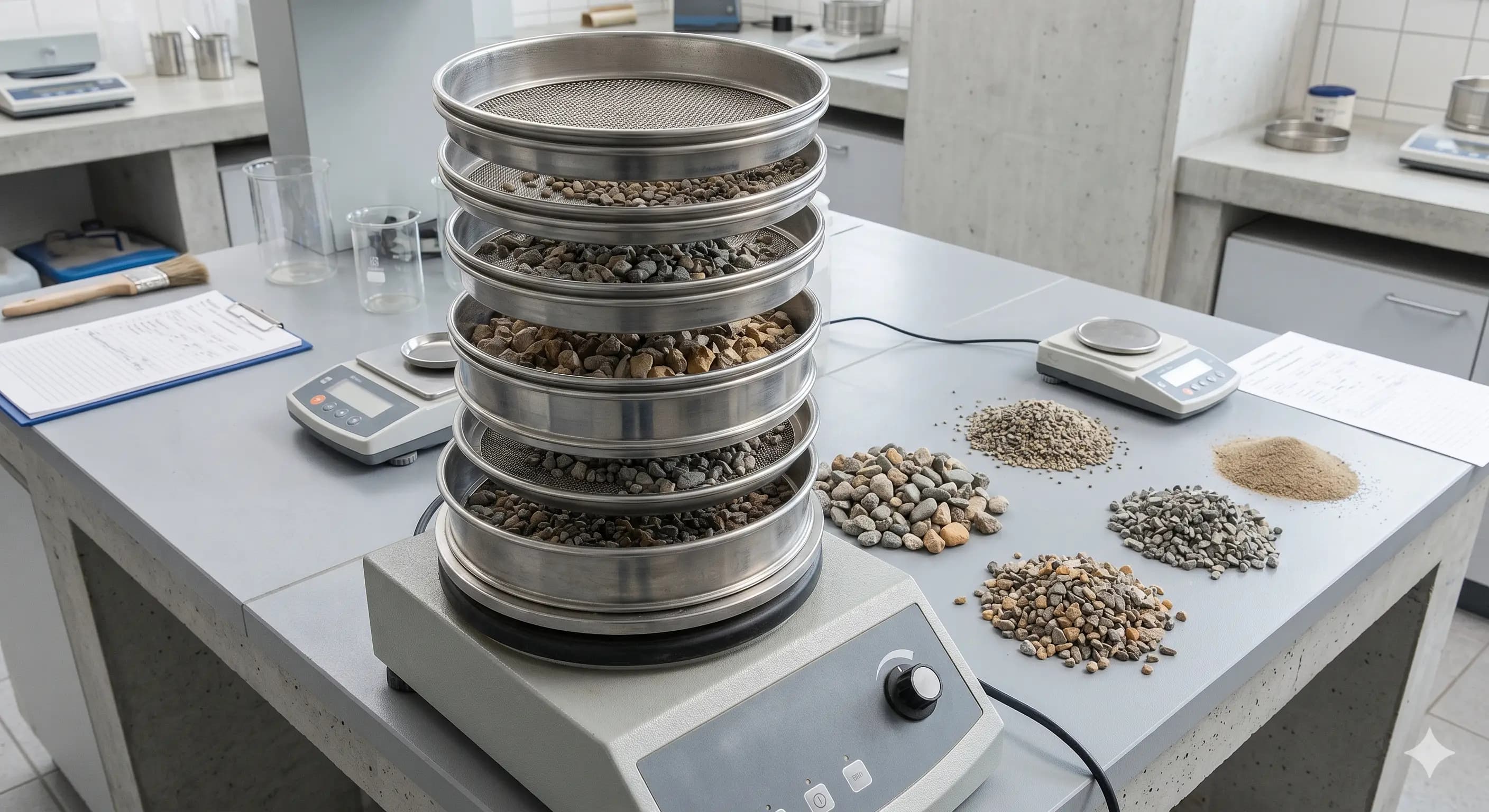
Grain-size distribution, hydrometer analysis, and moisture content
Atterberg limits for fine and cohesive soils
Proctor testing for dry density and optimum moisture
CBR and additional tests selected for the site's intended use

Standards Soil Testing Is Measured Against

Every borehole and lab test at TECHNO Soil Lab follows a specific international standard — not an ad-hoc procedure.

SBC 303

Saudi Building Code — sets minimum borehole count and depth by project size and type (§18)

ASTM D1586

Standard Penetration Test (SPT) for soil density/consistency at depth

ASTM D422

Grain-size analysis to classify soil type (sand, clay, silt)

ASTM D4318

Atterberg limits — liquid and plastic limit for cohesive soils

ASTM D1557

Modified Proctor for maximum dry density and optimum moisture in fill

ASTM D1883

California Bearing Ratio (CBR) for pavement and road layer design

From First Call to Final Report

Five connected stages, with the scope of each tailored to the site and project.

1

1. Site Visit & Borehole Count

Our team surveys the site and determines the required number of boreholes based on plot area and planned building type (residential, commercial, tower), per SBC 303 §18.

2

2. Drilling & Sampling

Boreholes are drilled to the specified depth with SPT roughly every 1.5 m, and disturbed/undisturbed samples taken from each distinct layer.

3

3. Lab Analysis

Samples move to our Makkah lab for grain-size, Atterberg limits, Proctor, and CBR analysis as the project requires.

4

4. Bearing Capacity Calculation

The geotechnical engineer analyzes SPT data and lab results to calculate safe bearing capacity and recommend a foundation type (isolated, raft, or piles).

5

5. Report Issuance

The site description, borehole logs, test results, calculations, and recommendations are compiled in one report. The delivery schedule is stated in the quotation after the borehole count, depths, and test program are reviewed.

Questions to Ask Before Signing With Any Soil Lab

When comparing soil testing laboratories in Saudi Arabia, review the borehole, testing, and reporting scope before comparing price or turnaround.

1Is the lab ISO 17025 accredited, and can I see the certificate before signing?
2How is the borehole count determined? Is it documented against SBC 303 §18?
3Is nuclear-method field density available, and does the technician hold a valid NRRC license?
4What's the exact turnaround in working days, stated in writing in the quote?
5Will the report explicitly state a recommended foundation type, or just raw numbers?
6Is the same team available for field density checks during the fill/compaction phase later?

What Do We Need to Quote a Soil Investigation?

Send the information you have so the team can define a preliminary scope instead of giving a generic price that may not fit your site.

Send These Details

Plot location or Google Maps link and city
Plot area and survey plan, if available
Project type and expected floors or basements
Available architectural or structural drawings and consultant requirements
Required site-access date and any drilling-rig access constraints

What Affects the Price?

1Required borehole count and depths
2Rig access and surface conditions
3Sampling method and field/laboratory test program
4Project location, report requirements, and schedule
Send Project Details on WhatsApp

Included Tests

16 field and laboratory tests available by project scope

Standard soil sampling from site

أخذ عينة من الردميات بالطريقة القياسية

ASTM D1452

Unit: sample

Sieve Analysis

التدرج الحبيبي

ASTM D422

Unit: sample

Fines passing #200 sieve (0.075 μm)

المواد الناعمة المارة من منخل #200

ASTM D1140

Unit: sample

Atterberg Limits (LL & PL)

حدود أتربرج (السيولة واللدونة)

ASTM D4318

Unit: sample

Modified Proctor

البروكتور المعدل

ASTM D1557

Unit: sample

California Bearing Ratio — CBR (3 molds)

نسبة التحمل كاليفورنيا (3 قوالب)

ASTM D1883

Unit: sample

Field Density — Sand Cone (min 5 pts/visit)

الكثافة الحقلية بالمخروط الرملي (5 نقاط/زيارة)

ASTM D1556

Unit: point

Field Density — Nuclear Method (5 pts/visit)

الكثافة الحقلية بالطريقة النووية (5 نقاط/زيارة)

ASTM D6938 / AASHTO T310

Unit: point

Thermal Conductivity

التوصيلية الحرارية للتربة

Unit: test

Thermal Resistivity

المقاومة الحرارية للتربة

Unit: test

Los Angeles Abrasion

مقاومة التآكل — لوس أنجلوس

ASTM C131

Unit: sample

Hydrometer Analysis

الهيدرومتر للمواد الطينية

ASTM D7928

Unit: sample

Moisture Content %

محتوى الماء

ASTM D2216

Unit: sample

Relative Density (sandy soil)

الكثافة النسبية للتربة الرملية

ASTM D4253 / D4254

Unit: test

Plate Load Test (P.L.T)

قرص التحميل

ASTM D1194

Unit: test

Slab Load Test

تحميل السقف

Unit: test

Why Choose Us

Why TECHNO Soil Lab?

16
Available Tests

Field and laboratory tests selected to match the project scope

15+
Years Experience

Accumulated technical experience in testing & engineering consultancy

5
Cities Served

From our Makkah head office, via equipped field teams

What Is Included in the Final Soil Report?

A submission-ready report — not scattered numbers.

Cover page with project location, fieldwork date, and report details
Borehole logs classifying each layer and its depth
Full lab results tables (SPT, grain size, Atterberg, CBR as applicable)
Groundwater level, if encountered
Safe bearing capacity calculation and foundation type recommendation
Report review and sign-off according to project scope and the requesting authority's requirements

Projects Where We Ran This Service

Related Reading

Common Questions

FAQ About Soil Testing Laboratory, Boreholes & Site Tests

Per SBC 303, a geotechnical investigation must include: exploratory borings, Standard Penetration Test SPT (ASTM D1586), grain size analysis (ASTM D422), and Atterberg limits (ASTM D4318). High-rise buildings and critical facilities require additional tests such as CBR and Plate Load.

Need Soil Testing Laboratory, Boreholes & Site Tests Services?

Our specialized team is ready to mobilize to your site anywhere in the Kingdom.

Soil Testing in Makkah — Unique Geological Challenges

Makkah's subsurface is a complex mix of ancient granitic rock outcrops in mountainous areas and loosely-deposited wadi fills in valleys. This sharp geological contrast makes soil testing in Makkah critical before any construction project.

Soil Characteristics Across Makkah Districts

Near Al-Haram and Batha Quraysh, geotechnical investigations reveal old fills of irregular density, requiring SPT tests to at least 20 m depth. In Jabal Omar, Aziziyah, and Mashash areas, fractured granitic formations dominate, requiring detailed rock-line depth mapping to identify load-bearing layers.

Requirements for Makkah's Major Projects

Grand Mosque expansion, Jabal Omar development, and Hajj infrastructure projects all require comprehensive geotechnical studies: bearing capacity, swell/compression indices, and seismic analysis per the Saudi Building Code. TECHNO Soil Lab issues certified reports accepted by KIDANA and Makkah Municipality.

Our team delivers detailed geotechnical reports recommending appropriate foundation solutions — mat foundations, bored piles, or rock-socketed piers. Contact us for a quote for your Makkah project.